Authorised Independent Nu Skin Distributor
Sunright® Sunscreen SPF 50 (USA)
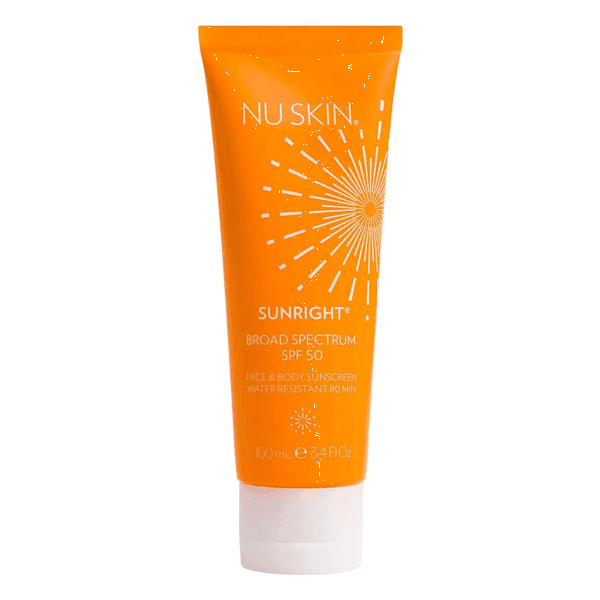
Product Description
Built for the Days You Actually Stay Outside
You're not packing sunscreen for a ten-minute walk to your car. You're heading to a July 4th cookout in Phoenix, a full-day hike in the Rockies, a Saturday at the beach in Miami, or a morning run along the Chicago lakefront when the summer sun is already blazing by 8 a.m. Those are the conditions Sunright® Sunscreen SPF 50 was built for — extended, real-world outdoor exposure where a light daily moisturizer with SPF 30 simply isn't the right tool. Broad-spectrum protection, a water-resistant formula, and a non-greasy texture that you'll actually want to reapply make this the go-to high-SPF option when UV exposure is sustained, not incidental.
Best Suited For / Less Suited For / Pairs Well With
- Best suited for: Outdoor athletes, beach and pool days, hikers, gardeners, outdoor workers, and anyone spending 4+ hours under direct sunlight in high-UV environments like Los Angeles, Phoenix, Houston, or Miami
- Less suited for: Office workers who want a lightweight everyday SPF — a daily SPF 30 moisturizer may be a more comfortable fit for pure desk-to-commute days
- Pairs well with: Sunright Insta Glow Tinted Self-Tanning Gel for safe color without UV exposure; ageLOC® Tru Face® Radiant Day as a daytime base layer on lower-exposure days; Tegreen 97® for internal antioxidant support during high-UV seasons
Why SPF 50 Matters More Than You Think
The American Academy of Dermatology recommends a minimum of SPF 30 for daily use — but specifically recommends SPF 50 for extended outdoor exposure. The math matters here: SPF 30 blocks approximately 97% of UVB rays; SPF 50 blocks approximately 98%. That 1% difference sounds negligible, but it means SPF 50 allows 50% less UV radiation through to your skin compared to SPF 30. Over the course of a four-to-six-hour outdoor day, that cumulative reduction is meaningful. Skin cancer is the most common cancer in the United States, with over 5 million cases treated annually — and UV exposure is the leading preventable cause. Sunright SPF 50 is a practical response to that risk.
What's Inside: Key Ingredients
- Broad-Spectrum UV Filter System — A multi-filter combination of UV-absorbing and UV-reflecting agents covering both the UVA spectrum (320–400nm, responsible for premature aging and deeper skin damage) and UVB spectrum (290–320nm, responsible for sunburn). The multi-filter architecture builds in redundancy: if one filter component begins to degrade during prolonged exposure, others continue providing protection — a critical design feature for all-day outdoor wear.
- Water-Resistant Film-Formers — Flexible, water-resistant film-forming ingredients that maintain their integrity during swimming and sweating. Water-resistant performance is rated under FDA testing protocols — refer to the product label for the specific water-resistance duration rating. Importantly, reapplication after water exposure is still required; the FDA banned the term "waterproof" from sunscreen labels in 2011, and for good reason — no sunscreen maintains full protection indefinitely in water.
- Lightweight Skin-Conditioning Emollients — Many high-SPF formulas feel like applying paste — thick, white, and suffocating. Sunright SPF 50 incorporates lightweight emollients that create a comfortable, moisturizing feel. Your skin stays hydrated and breathable during extended wear, not coated.
- Antioxidant Support Ingredients — No sunscreen blocks 100% of UV rays. The antioxidant components in the formula work as a secondary defense layer, helping to neutralize free radicals generated by the approximately 2% of UV radiation that does penetrate. This combination of UV filtration plus antioxidant activity is considered a best-practice approach to comprehensive photoprotection.
What Makes Sunright SPF 50 Different
The fundamental problem with high-SPF sunscreens has always been a compliance issue, not a chemistry one. If a formula feels thick, greasy, or leaves an obvious white cast — especially on deeper skin tones — people skip reapplication, or skip it entirely. Protection only works when you actually wear it. Sunright SPF 50 was formulated to remove those excuses. The texture is closer to a lightweight lotion than a traditional sunscreen, it blends into most skin tones without a chalky residue, and it's designed to not sting eyes during sweating — a real-world concern for anyone active outdoors in summer heat.
It's also worth noting the brand context: Sunright is a focused sun protection line, not a general skincare brand that added SPF as an afterthought. That specialization shows in formulation priorities — UV filter stability for all-day efficacy, meaningful water resistance for active use, and cosmetic wearability that makes reapplication realistic rather than dreaded.
How It Compares
| Feature | Sunright® SPF 50 | Neutrogena Ultra Sheer SPF 50+ | CeraVe Hydrating Mineral SPF 50 | SkinCeuticals Physical Fusion SPF 50 |
|---|---|---|---|---|
| SPF Level | 50 | 50+ | 50 | 50 |
| Filter Technology | Multi-filter broad-spectrum (chemical + antioxidant support) | Chemical UV filters (Helioplex® stabilization) | 100% mineral (zinc oxide + titanium dioxide) | 100% mineral (zinc oxide + titanium dioxide) |
| White Cast | Minimal — formulated to blend into most skin tones | Minimal — sheer finish | Moderate — mineral white cast noticeable on deeper tones | Tinted options available; untinted has mild cast |
| Water Resistance | Yes — rated for active, outdoor use | Yes — 80 minutes water resistance | Yes — 80 minutes water resistance | Yes — water-resistant |
| Texture | Lightweight lotion feel; non-greasy | Ultra-sheer, dry-touch finish | Hydrating but heavier; more emollient-rich | Lightweight with subtle tint; more luminous finish |
| Antioxidant Support | Yes — built into formula | Limited | Ceramide-based barrier support (not UV antioxidants) | Yes — artemia salina extract |
| Best For | Active outdoor use; extended exposure; all skin tones | Everyday urban SPF; lightweight preference | Dry or sensitive skin; mineral-only preference | Premium daily protection; dermatologist office use |
| Retail Price | $28.00 | ~$15–18 (drugstore) | ~$18–22 (drugstore/pharmacy) | ~$45–55 (dermatologist/spa) |
Formulation note: Chemical UV filter systems like Sunright SPF 50 generally offer more elegant cosmetic textures and less white cast than mineral-only formulas, which is a meaningful compliance advantage for darker skin tones and active wear. Mineral-only formulas (CeraVe, SkinCeuticals mineral line) are preferred by those with specific sensitivities to chemical UV filters. Neither category is universally "better" — the right choice depends on skin type, activity level, and personal preference.
Frequently Asked Questions
Is Sunright® SPF 50 available for purchase in the US, and how long does shipping take?
Yes — Sunright® Sunscreen SPF 50 is available at $28.00 through nubestskin.com/us. Orders ship from the official Nu Skin US warehouse and typically arrive within 3–5 business days across the continental United States. Alaska and Hawaii may require additional transit time.
What does "broad-spectrum" mean on a sunscreen label, and why does it matter?
Broad-spectrum is an FDA-defined label claim that means a sunscreen protects against both UVA rays (320–400nm — the longer wavelengths that penetrate deeper and drive photoaging) and UVB rays (290–320nm — the wavelengths that cause sunburn and direct DNA damage). A sunscreen that only blocks UVB may prevent burns but still allows significant UV aging and skin damage. The FDA requires broad-spectrum testing before a product can carry that label. Sunright SPF 50 meets this standard.
How often should I reapply, and does water resistance change that schedule?
The FDA recommends reapplying any sunscreen at least every two hours during continuous outdoor exposure — and immediately after swimming or heavy sweating, regardless of water-resistance rating. Water resistance means the SPF maintains its rated protection for a specified period during water exposure (typically 40 or 80 minutes under FDA testing conditions), not that it lasts indefinitely. After that window, the film-forming layer is compromised and protection degrades. Reapplication is non-negotiable for real sun protection.
How much product should I apply for full SPF 50 protection?
The FDA's SPF rating system is based on a specific application amount: 2 mg per square centimeter of skin. In practical terms, that's approximately one ounce (about a shot glass worth) to cover the full body, or a nickel-sized amount for the face alone. Most people apply less than half the recommended amount, which means they're effectively getting significantly less protection than the label SPF number suggests. Apply generously — this is not the step to be conservative with.
Is Sunright SPF 50 suitable for sensitive or acne-prone skin?
The formula is designed to minimize irritation, including eye-sting during sweating — a meaningful consideration for people active outdoors. If you have clinically sensitive or reactive skin, or a history of sensitivity to specific chemical UV filters, reviewing the full ingredient list with a dermatologist before use is the prudent approach. Those with confirmed sensitivities to chemical filters may be better suited to mineral-only formulas. For most skin types including combination and oily, the lightweight, non-greasy texture is well-tolerated.
Can I use this sunscreen on my face, body, or both?
Sunright SPF 50 is formulated for use on exposed skin areas including both face and body. For daily facial use with less intense outdoor exposure, some users prefer a lighter-weight SPF 30 moisturizer for everyday wear and reach for SPF 50 specifically on high-exposure days — beach trips, hikes, outdoor sports, or extended afternoon sun in high-UV cities like Phoenix, Los Angeles, or Miami. For active full-body coverage, SPF 50 is the appropriate choice.
Does SPF 50 protect against tanning as well as burning?
Both tanning and burning are UV damage responses — tanning is not a "safe" form of sun exposure. Any detectable tan is a sign that UV radiation has reached and affected the deeper layers of your skin. SPF 50 significantly reduces the UV dose reaching your skin (blocking ~98% of UVB), which reduces — but does not completely eliminate — the potential for tanning. For those seeking a sun-kissed look without UV exposure, the Sunright Insta Glow Tinted Self-Tanning Gel provides color through DHA, not UV.
Works With: The Sun-Smart Routine
- Sunright® Insta Glow Tinted Self-Tanning Gel ($17.00) — Safe color without UV damage; use alongside SPF 50 for a sun-kissed look while staying protected
- ageLOC® Tru Face® Radiant Day ($42.00) — Daytime moisturizer for lower-exposure days; layer before SPF 50 on high-intensity outdoor days
- Tegreen 97® ($63.00) — Oral antioxidant supplement with 98% standardized polyphenols from green tea; supports internal antioxidant defense during high-UV-exposure seasons
- Nutricentials® Day Dream Protective Cream SPF 35 ($29.90) — Lighter-weight SPF option for everyday desk-and-commute days when SPF 50 isn't necessary
- Beauty Focus™ Collagen+ ($87.00) — Ingestible collagen supplement for comprehensive skin support alongside topical UV protection
Sources & References
- American Academy of Dermatology Association — Sunscreen FAQs: https://www.aad.org/public/everyday-care/sun-protection/sunscreen-patients/sunscreen-faqs
- FDA — Sunscreen: How to Help Protect Your Skin from the Sun: https://www.fda.gov/drugs/understanding-over-counter-medicines/sunscreen-how-help-protect-your-skin-sun
- Skin Cancer Foundation — Skin Cancer Facts & Statistics: https://www.skincancer.org/skin-cancer-information/skin-cancer-facts/
- Lim HW et al. "American Academy of Dermatology photoprotection recommendations." Journal of the American Academy of Dermatology, 2017. https://pubmed.ncbi.nlm.nih.gov/29089191/
- Nu Skin — Sunright® Sunscreen SPF 50 Product Information (US): https://www.nuskin.com
*Independent Nu Skin Brand Affiliate — not produced or endorsed by Nu Skin Enterprises Inc.*
Why Buy from NuBest Skin?
No registration needed — shop and purchase directly, no account setup required.
Shipped from official Nu Skin warehouse — 100% authentic, factory-sealed products with full warranty.
Competitive pricing — we offer great value on authentic Nu Skin products.
Nu Skin product purchasing channels for United States -- relationship, invoice, warranty, warehouse fulfilment, and marketplace-risk guidance.