
1 April 2026
What Your Multivitamin Label Isn't Telling You — And What Actually Matters
The American supplement industry generates over $55 billion in annual revenue, according to the Nutrition Business Journal. The FDA does not require supplement manufacturers to prove their products work before selling them — only that the ingredients are generally recognised as safe. This creates a market where a $6 multivitamin and a $60 one can make nearly identical label claims, while delivering very different results at the cellular level.
We spent three months comparing multivitamin formulas available in the US, reading the research on bioavailability and nutrient forms, and testing one of the more scientifically designed options. The differences between a well-made multivitamin and a cheap one are real — but they're hidden in details most consumers never check.
The bioavailability problem with cheap supplements
Bioavailability — the proportion of a nutrient that actually enters your circulation after ingestion — is the single most important factor that supplement labels don't adequately convey. Two multivitamins can list identical amounts of magnesium, but if one uses magnesium oxide (roughly 4% bioavailable, per a 2001 study in the Journal of the American College of Nutrition) and the other uses magnesium glycinate (estimated 20–25% bioavailable), you're absorbing five to six times more from the second.
This isn't a minor detail. It's the difference between a supplement that works and one that mostly passes through you. The same pattern applies across nutrients:
- Vitamin D: D3 (cholecalciferol) is 87% more effective at raising serum 25(OH)D levels than D2 (ergocalciferol), per a 2012 meta-analysis in the American Journal of Clinical Nutrition
- Folate: L-methylfolate is directly usable by the body. Folic acid requires enzymatic conversion through MTHFR — a gene that up to 40% of Americans carry at least one variant of, per NIH data
- Vitamin E: Natural d-alpha-tocopherol has roughly twice the biological activity of synthetic dl-alpha-tocopherol
- Zinc: Zinc picolinate and zinc citrate absorb significantly better than zinc oxide
When we checked the labels of the four best-selling US multivitamins, three used the cheaper, less bioavailable forms of at least four key nutrients. The savings at the manufacturing level are significant. The cost to the consumer is supplements that underdeliver.
Fat-soluble vs water-soluble vitamins: why delivery format matters
Vitamins divide into two categories based on how they dissolve: fat-soluble (A, D, E, K) and water-soluble (C and the B-complex). This distinction has practical implications for supplementation that most single-tablet multivitamins ignore.
Fat-soluble vitamins require dietary fat for absorption. A 2015 study in the Journal of the Academy of Nutrition and Dietetics found that taking fat-soluble vitamins with a meal containing at least 15g of fat significantly improved absorption compared to taking them on an empty stomach. Delivering these vitamins in a lipid-based soft-gel capsule provides a built-in fat matrix for absorption — particularly useful for people who take their vitamins in the morning before a full meal.
Water-soluble vitamins, by contrast, absorb readily from the GI tract without fat. They also aren't stored in the body (excess is excreted), which means consistent daily intake matters more. A tablet format works well for these.
Honestly, the single-tablet multivitamin format is a compromise designed for convenience. It works — but it's a blunt instrument compared to separating fat-soluble and water-soluble nutrients into their optimal delivery vehicles.
Antioxidants: cutting through the marketing
The American Heart Association's position paper on antioxidant vitamins (2004, updated) is worth reading in full, but here's the summary: the evidence supports obtaining antioxidants from food, and does not support high-dose single-antioxidant supplementation for disease prevention. The ATBC trial and CARET trial both found potential harm from high-dose beta-carotene supplements in smokers.
However — and this is where nuance matters — the research on moderate-dose, multi-antioxidant supplementation tells a different story. The SU.VI.MAX trial (France, 13,000 participants, 7.5 years) found that a combination of vitamins C, E, beta-carotene, selenium, and zinc at nutritional doses reduced cancer incidence in men by 31%. The Physicians' Health Study II found that daily multivitamin use reduced total cancer incidence by 8% over 11 years.
The pattern in the research is consistent: isolated high-dose antioxidants are risky; comprehensive, nutritional-dose antioxidant combinations from a multivitamin appear beneficial. This aligns with how antioxidants function in food — as part of a complex, synergistic system.
What the NHANES data shows about American diets
The CDC's National Health and Nutrition Examination Survey (NHANES) consistently identifies the same micronutrient gaps in the American population: vitamin D (42% of adults are deficient, per a 2011 analysis in Nutrition Research), magnesium (48% consume below the estimated average requirement), vitamin E, calcium, and potassium. These numbers persist across income levels — they're not purely a poverty-related issue.
What's particularly striking is that these deficiencies exist despite food fortification. The US fortifies bread, cereal, milk, and salt with key nutrients. And still, nearly half the adult population is magnesium-deficient. The processed American diet, while calorie-rich, is often micronutrient-poor — a phenomenon researchers call "hidden hunger."
9 Body Functions Supported by LifePak
Based on established nutritional science for the vitamins and minerals in LifePak. Source: Nu Skin Pharmanex product documentation.
How LifePak compares to top US multivitamins
We put LifePak Anti-Aging Formula side by side with the three best-selling multivitamin brands in the United States.
| Criteria | LifePak | Centrum Silver | Garden of Life mykind | Ritual Essential |
|---|---|---|---|---|
| Number of nutrients | 20+ | 25 | 16 (whole-food based) | 10 (targeted) |
| Format | Dual sachet (tablet + soft-gel) | Single tablet | Single tablet | Two capsules |
| Antioxidant blend | Yes — C, E, selenium, carotenoids | Yes — C, E | Yes — whole-food sourced | Limited |
| Third-party certified | SCS (NSF) | USP verified | NSF Certified for Sport | USP verified ingredients |
| Bioavailability design | Fat/water-soluble separated | Combined tablet | Whole-food matrix | Delayed-release capsule |
Ritual takes an interesting approach — fewer nutrients, but traceable sourcing and delayed-release capsules. Garden of Life emphasises whole-food-sourced vitamins, which appeals to the natural foods market. Centrum remains the volume leader but uses a traditional compressed-tablet format. LifePak's dual-sachet approach is less convenient (two things to take instead of one) but more scientifically sound for absorption.
Frequently asked questions
Does the FDA regulate multivitamins?
Supplements are regulated under DSHEA (1994), which requires manufacturers to ensure safety but does not require pre-market efficacy testing. The FDA can act against unsafe products after they're on the market. Third-party certifications (NSF, USP, SCS) provide additional quality assurance beyond baseline FDA requirements.
Are expensive multivitamins always better?
Not necessarily — price doesn't guarantee quality. However, cheaper multivitamins often use less bioavailable nutrient forms because they cost less to manufacture. The key is reading the label for specific nutrient forms (chelated minerals, methylfolate, D3) rather than going by price alone.
How is LifePak different from a standard pharmacy multivitamin?
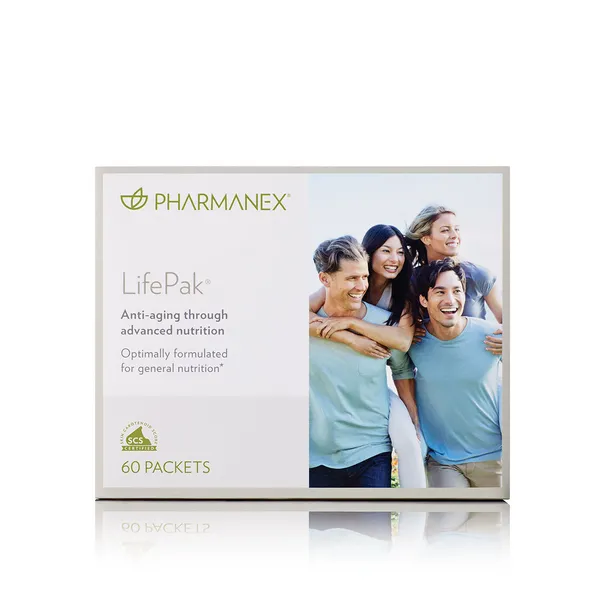
Three main differences: the dual-sachet format separates fat-soluble and water-soluble nutrients for better absorption; LifePak holds SCS certification from NSF International (independent off-the-shelf testing); and the formula includes a broader antioxidant blend with carotenoid diversity beyond just vitamins C and E.
Can I take a multivitamin if I'm already taking prescription medication?
Consult your physician before combining any supplement with prescription medication. Specific interactions exist — vitamin K with blood thinners, calcium with thyroid medication, iron with certain antibiotics. Your pharmacist can also advise on timing to minimize interactions.
Why does nearly half of America have a magnesium deficiency?
Modern American diets are heavy on processed foods, which lose magnesium during processing. Soil depletion has reduced magnesium content in crops over decades. The recommended daily amount (420mg for adult men, 320mg for women) is difficult to achieve through diet alone without deliberately including magnesium-rich foods like dark leafy greens, nuts, and seeds daily.
These statements have not been evaluated by the Food and Drug Administration. This product is not intended to diagnose, treat, cure, or prevent any disease.
Data sourced from CDC NHANES surveys, NIH Office of Dietary Supplements fact sheets, and peer-reviewed research cited in text. Product information from official Nu Skin Pharmanex documentation.
Independent Nu Skin Brand Affiliate — not produced or endorsed by Nu Skin Enterprises Inc.