
Beauty Focus Collagen+: What the British Skin Foundation's Research Tells Us
The quiet change happening beneath your skin
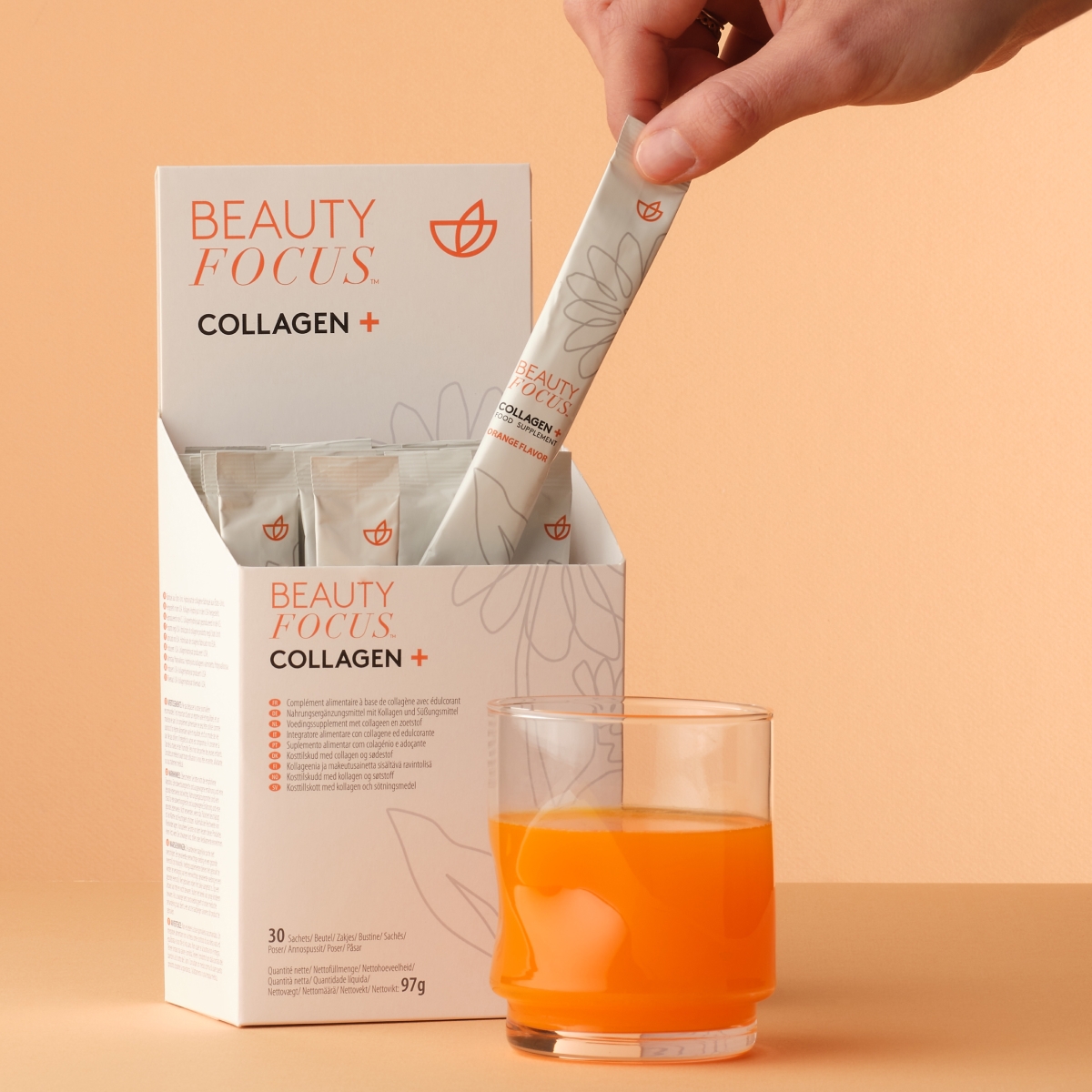
We've been following Nu Skin's collagen research for a while, and the reformulated Beauty Focus Collagen+ is genuinely different from earlier versions. If you live in the UK, your skin has a lot to contend with. Grey skies for much of the year, central heating that parches the air indoors, and hours spent in front of screens at work and at home. Most of us notice the effects gradually — a little less bounce in the cheeks, fine lines that linger longer than they used to, skin that feels drier despite a decent moisturiser.
British pragmatism tends to kick in at this point. We accept it as ageing and carry on. But what if understanding the science behind these changes could help you make smarter choices about your skincare routine?
This article is not a sales pitch. It is a straightforward look at what collagen does, why your body makes less of it over time, and what the clinical research actually says about supplementation.
What collagen is and why it matters
Collagen is the most abundant protein in your body. It forms the structural scaffolding of your skin, giving it firmness, elasticity, and that plump, hydrated appearance we associate with youthful-looking skin. In fact, collagen accounts for roughly 75–80% of your skin's dry weight, with Type I collagen being the dominant form.
Think of collagen fibres as the springs inside a mattress. When they are plentiful and tightly woven, the surface stays smooth and resilient. As those springs weaken and thin out, the surface begins to sag and crease.
The mid-twenties turning point
From around the age of 25, your body's natural collagen production begins to decline at a rate of approximately 1–1.5% per year. By the time you reach 50, you may have lost as much as a third of your total collagen. This is a normal part of ageing, but several lifestyle and environmental factors can accelerate the process.
What speeds up collagen loss?
- UV exposure: Even on overcast British days, UV radiation penetrates cloud cover and triggers enzymes called matrix metalloproteinases (MMPs) that break down collagen fibres. Cumulative sun exposure over decades is one of the leading causes of premature skin ageing.
- Blue light: Screens emit high-energy visible (HEV) light. Emerging research suggests that prolonged blue light exposure may contribute to oxidative stress in skin cells, though the evidence is still developing compared to UV research.
- Sugar and glycation: When excess glucose in the bloodstream binds to collagen proteins, it forms advanced glycation end-products (AGEs). These make collagen fibres stiff and brittle, reducing skin elasticity.
- Stress and poor sleep: Chronic stress elevates cortisol, which has been shown to inhibit collagen synthesis. Sleep is when your body does much of its repair work, so consistently poor sleep compounds the problem.
- Smoking: Tobacco smoke generates free radicals that directly damage collagen and elastin. It also constricts blood vessels, reducing nutrient delivery to the skin.
Collagen decline by age
Based on estimated 1–1.5% annual decline from age 25. Individual results vary.
Can collagen supplements actually help?
This is where healthy scepticism meets clinical evidence. The idea of drinking or eating collagen to improve your skin sounds almost too simple, so it is worth looking at what well-designed studies have found.
How hydrolysed collagen works
Collagen supplements do not deliver whole collagen molecules to your skin — that would be impossible. Instead, they use hydrolysed collagen peptides: collagen that has been enzymatically broken down into small fragments, typically 2,000–5,000 daltons in molecular weight. These peptides are absorbed through the gut into the bloodstream and have been shown to accumulate in skin tissue.
Once there, they appear to serve a dual purpose. First, they provide amino acid building blocks (particularly glycine, proline, and hydroxyproline) for new collagen synthesis. Second, research suggests that the peptide fragments themselves act as signals, stimulating fibroblast cells to produce more collagen, elastin, and hyaluronic acid.
What the clinical research shows
A 2023 systematic review and meta-analysis published in the journal Nutrients by Pu et al. examined 26 randomised controlled trials involving 1,721 participants. The analysis found that oral collagen supplementation was associated with significant improvements in skin hydration, elasticity, and wrinkle reduction compared to placebo groups. The authors concluded that the evidence supported a beneficial effect, though they noted that study quality varied and longer-term data would be welcome.
More recently, a 2024 clinical trial published in Dermatology Research and Practice by Reilly reported particularly striking results. Participants who took collagen peptides daily saw a 13.8% increase in skin hydration and a 22.7% improvement in skin elasticity over the study period.
It is worth noting that not all collagen supplements are created equal. The source, peptide size, dosage, and complementary ingredients all influence outcomes. This is where formulation matters.
A closer look at Beauty Focus Collagen+
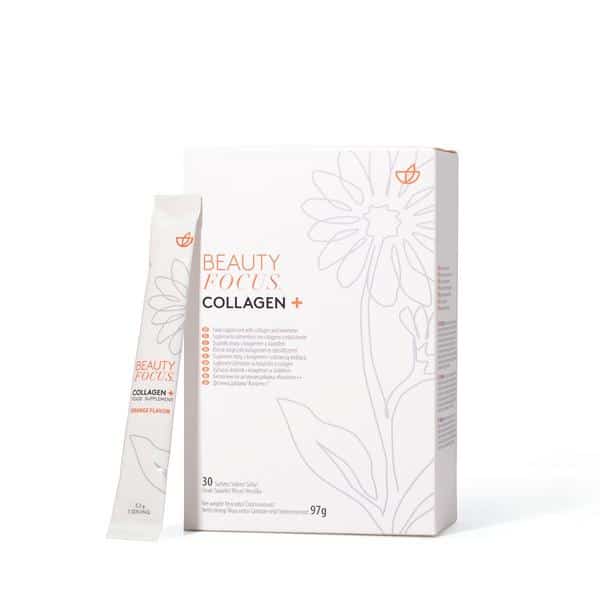
Beauty Focus Collagen+ is Nu Skin's collagen supplement, formulated with three key active ingredients that work together to support skin from the inside out.
Bioactive collagen peptides — 2,500 mg
Each serving provides 2,500 mg of hydrolysed collagen peptides. This dosage sits comfortably within the range used in the clinical studies referenced above. The peptides are designed for high bioavailability, meaning a greater proportion reaches your skin tissue where it can contribute to collagen synthesis.
Lutein — 5 mg from marigold flowers
Lutein is a carotenoid antioxidant naturally found in marigold (tagetes) flowers. It is perhaps best known for its role in eye health, but it also accumulates in the skin where it acts as an antioxidant. Lutein helps protect skin cells against oxidative stressors, including those associated with blue light exposure — particularly relevant if you spend hours each day in front of a computer or phone screen.
Phytoceramides — 70 mg from wheat germ extract
Honestly, the addition of ceramides surprised us — most collagen supplements stop at peptides. Ceramides are lipid molecules that form a crucial part of your skin's moisture barrier — the outermost layer that keeps water in and irritants out. As you age, ceramide levels decline, which is one reason skin becomes drier and more sensitive over time. Phytoceramides derived from wheat germ extract are plant-based ceramides that support the skin's natural moisture barrier from within.
Clinical testing
Nu Skin conducted a 120-day clinical study on 60 adults aged 40–60 to evaluate the formula's effects on skin hydration, elasticity, and overall appearance. The combination of collagen peptides, lutein, and phytoceramides was designed to address multiple aspects of skin ageing simultaneously, rather than relying on a single ingredient.
Beauty Focus Collagen+ is available at £59.90 with no registration required — you can order directly, and it ships from the official Nu Skin warehouse.
✦ Key ingredients at a glance
- Bioactive Collagen Peptides (2,500 mg) — supports collagen and elastin production
- Lutein (5 mg from marigold flowers) — antioxidant protection against blue light
- Phytoceramides (70 mg from wheat germ) — supports skin moisture barrier
How to get the most from collagen supplementation
Consistency is the single most important factor. Collagen supplements are not an overnight fix. Based on the available research, most people begin to notice improvements in skin hydration within 4–6 weeks, with more significant changes in elasticity and fine lines appearing around the 8–12 week mark.
Practical daily tips
- Pick a time and stick to it. Whether you take it first thing in the morning or as part of your evening routine, consistency matters more than timing. Many people find it easiest to incorporate it into their morning tea or coffee ritual.
- Stay hydrated. Collagen works best when your body is well-hydrated. Aim for 6–8 glasses of water throughout the day — something many of us forget during busy workdays.
- Support with vitamin C. Your body needs vitamin C to synthesise collagen. Ensure you are getting enough through your diet — citrus fruits, peppers, broccoli, and berries are all excellent sources.
- Wear SPF daily. Even in the UK, even in January. UV protection is the single most effective anti-ageing measure you can take, and it prevents new collagen damage while your supplement supports repair.
- Be patient. Skin cell turnover takes roughly 28 days, and collagen remodelling is a gradual process. Give it a full 12 weeks before drawing conclusions.
Frequently asked questions
Is collagen supplementation safe?
Hydrolysed collagen peptides have an excellent safety profile and have been used in food and supplement form for decades. The studies referenced in this article reported no significant adverse effects. However, if you have a known allergy to the collagen source (typically bovine or marine) or to wheat (relevant to the phytoceramides in Beauty Focus Collagen+), you should check the ingredients carefully or consult your GP.
I am in my twenties — is it too early to start?
Not at all. Since collagen decline begins around 25, starting supplementation in your mid-to-late twenties is a proactive approach. Think of it as maintenance rather than repair. That said, the visible benefits tend to be more noticeable in those over 30, simply because there is more ground to recover.
Can I get enough collagen from food alone?
Bone broth, chicken skin, and fish skin are natural sources of collagen, but the collagen in these foods has not been hydrolysed into small peptides. This means the bioavailability — how much your body can actually absorb and use — is generally lower than with a hydrolysed supplement. A balanced diet rich in protein, vitamin C, and antioxidants certainly supports your body's own collagen production, but supplementation offers a more targeted approach.
How long before I see results?
Based on published research, improvements in skin hydration can begin within 4–6 weeks. Changes in elasticity and the appearance of fine lines typically become noticeable after 8–12 weeks of consistent daily use. Individual results vary depending on age, baseline skin condition, and lifestyle factors.
We'd recommend starting with a single sachet daily for the first two weeks before moving to two. One thing we've noticed — consistency matters more than dosage. Two sachets a day for 90 days beats four sachets for 30.
Product information and clinical references sourced from official Nu Skin Beauty Focus Collagen+ product documentation. Independent Nu Skin Brand Affiliate — not produced or endorsed by Nu Skin Enterprises Inc.
This product is a food supplement and should not be used as a substitute for a varied and balanced diet and a healthy lifestyle. Do not exceed the recommended daily dose.
This website is independently operated by an authorised Nu Skin distributor and is not produced, endorsed, or approved by Nu Skin Enterprises, Inc. Nu Skin® is a registered trademark of Nu Skin Enterprises, Inc.