
Sun, Surf and Micronutrient Deficiency: The Australian Nutrition Gap
Published 2 April 2026 · Updated 5 July 2026

One in four Australian adults is vitamin D deficient, according to the Australian Bureau of Statistics (ABS) National Health Survey. In a country with 3,000+ hours of sunshine per year, that number should be surprising — but dermatologists have done such an effective job promoting sun protection (rightly so, given Australia's skin cancer rates) that many Australians now avoid the very UV exposure that produces vitamin D. It's a genuine public health paradox.
We spent two months examining Australian dietary data, comparing multivitamin options available here, and testing a comprehensive formula to see whether supplementation makes practical sense. The short answer: for most Australian adults, it does — but the details matter more than the marketing.

How your vitamin needs change with age
The NHMRC's Nutrient Reference Values tell one story; the ABS data on what Australians actually consume tells another. At every life stage, there are gaps — but they shift:
- Adults 19–50: Women commonly fall short on iron (particularly during reproductive years), calcium, and folate. Men tend to be low on magnesium and potassium. Both sexes are frequently vitamin D deficient.
- Adults 51–70: B12 absorption declines naturally with age as stomach acid production decreases. Calcium and vitamin D requirements increase. The NHMRC recommends 600 IU of vitamin D daily for this group, rising to 800 IU after 70.
- Over 70: The ABS data shows nutrient adequacy drops significantly. Zinc, B6, and B12 become more critical for immune function, which naturally declines with age.
What surprised us reviewing the NHMRC data was how early the gaps appear. It's not just an ageing issue — Australians in their twenties already show widespread vitamin D and magnesium inadequacy.
Antioxidants and oxidative stress: what they actually do
The term "antioxidant" has been overused in marketing to the point where it's nearly meaningless to most consumers. Here's what the science actually says: oxidative stress occurs when reactive oxygen species (free radicals) overwhelm your body's defence systems. This contributes to cellular damage, accelerated ageing, and is implicated in cardiovascular disease, neurodegeneration, and cancer development — according to research published in the International Journal of Biomedical Science.
Your body produces its own antioxidant enzymes (superoxide dismutase, catalase, glutathione peroxidase), but these require mineral cofactors — zinc, selenium, copper, manganese — to function. Dietary antioxidants like vitamins C and E, carotenoids, and polyphenols complement this system. The Australian diet, while rich in fresh produce by global standards, still shows selenium intake below the NHMRC adequate intake level for a significant proportion of the population.
The evidence doesn't support megadosing antioxidants. A 2007 Cochrane Review actually found potential harm from very high-dose beta-carotene and vitamin E supplementation. The sweet spot, based on current research, is nutrient-level antioxidant intake — amounts you'd get from an excellent diet, provided consistently through supplementation when diet falls short.
The immune system: vitamins that actually matter
COVID-19 renewed public interest in immune-supporting nutrients, and honestly, we were sceptical about the supplement industry's response — a lot of opportunistic marketing followed. But stripping away the hype, the immunology research is solid on several micronutrients:
Vitamin C supports neutrophil function and is consumed rapidly during infection — a 2017 meta-analysis in Nutrients found consistent reduction in cold duration with regular supplementation. Vitamin D receptors exist on virtually every immune cell, and the Australian Prescriber journal (2014) notes that deficiency is associated with increased susceptibility to infection. Zinc is required for T-cell maturation, and selenium for optimal antibody production.
None of these are magic bullets. But collectively, ensuring adequate levels of all four supports the immune system's baseline function. It's not about "boosting" — that's not how immunology works — it's about not operating with a deficit.

9 Body Functions Supported by LifePak
Based on approved health claims for the vitamins and minerals contained in LifePak. Source: Nu Skin Pharmanex product documentation.
How LifePak compares to popular Australian multivitamins
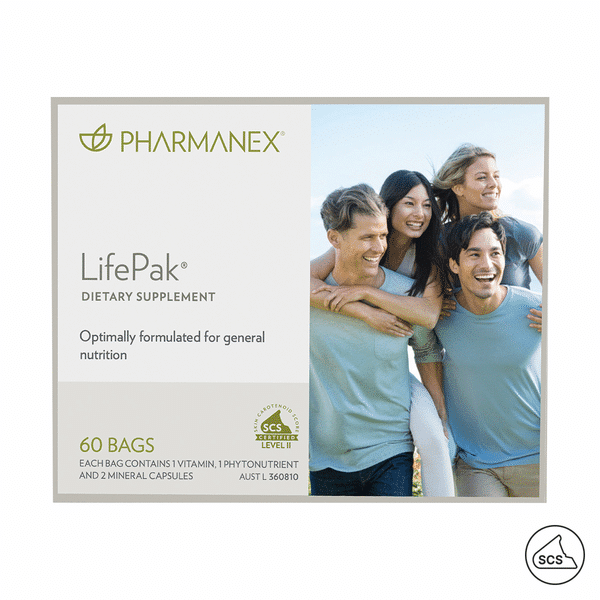
We compared LifePak Premium Multivitamin against three of the most-sold multivitamins in Australian pharmacies. The differences are more significant than the packaging suggests.
| Criteria | LifePak Premium | Blackmores Total Nutrition | Swisse Ultivite | Centrum Advance |
|---|---|---|---|---|
| Number of nutrients | 20+ | 22 | 36 (incl. herbs) | 24 |
| Format | Dual sachet (tablet + capsule) | Single tablet | Single tablet | Single tablet |
| Antioxidant blend | Yes — C, E, selenium, carotenoids | Yes — C, E | Yes — with herbal antioxidants | Yes — C, E |
| Third-party certified | SCS (NSF) | GMP / TGA listed | GMP / TGA listed | GMP |
| Bioavailability design | Fat/water-soluble separated | Combined | Combined | Combined |
Swisse includes herbal ingredients alongside vitamins, which is a different philosophy — more ingredients isn't automatically better if the core vitamin and mineral doses are lower as a result. Blackmores has a solid reputation and TGA listing, but uses a single-tablet format. In our experience, the dual-format approach Pharmanex uses with LifePak makes a noticeable difference, though that's harder to quantify than a lab test.
Frequently asked questions
Do Australians need more vitamin D than Europeans?
Not more — but the deficiency pattern is different. Australian sun exposure guidelines emphasise protection due to high UV, which reduces natural vitamin D synthesis. The ABS data shows 23% of Australian adults are deficient despite high sunshine hours. The NHMRC recommends 600 IU daily for adults under 70.
Can't I just eat more fruit and vegetables?
A diet rich in produce is essential and not replaceable by supplements. However, even with five serves of vegetables daily, vitamin D, selenium, and iodine are difficult to achieve through food alone in Australia. Supplementation fills specific gaps — it doesn't replace dietary quality.
How long before I notice a difference from a multivitamin?
Honestly, most people won't feel a dramatic change overnight. Correcting a vitamin D deficiency typically takes 8–12 weeks of consistent supplementation to normalise blood levels, per GP guidelines. Some people report improved energy within 2–4 weeks, particularly if B12 or iron was low, but setting realistic expectations matters.
Is LifePak tested for quality in Australia?
LifePak carries SCS certification through NSF International, which involves independent testing of finished products. Pharmanex operates under GMP standards. For the Australian market, products are listed with the TGA as required by Australian law.
Why does LifePak come in sachets?
Fat-soluble vitamins (A, D, E, K) absorb more efficiently in a lipid-based soft-gel capsule, while water-soluble vitamins (B-complex, C) are best delivered as tablets. The dual-sachet format keeps these separate for optimal absorption — something a single compressed tablet can't achieve.
Always read the label and follow directions for use. Vitamins and minerals can only be of assistance if dietary intake is inadequate.
Data sourced from Australian Bureau of Statistics National Health Survey (2022), NHMRC Nutrient Reference Values, and published peer-reviewed research cited in text. Product information from official Nu Skin Pharmanex documentation.
Independent Nu Skin Brand Affiliate — not produced or endorsed by Nu Skin Enterprises Inc.
Sources & References
- Australian Bureau of Statistics (ABS) — National Health Survey: Biomedical Results for Nutrients, ABS.gov.au. Covers vitamin D deficiency prevalence and nutrient adequacy data across Australian adult age groups.
- National Health and Medical Research Council (NHMRC) — Nutrient Reference Values for Australia and New Zealand, NHMRC.gov.au. Defines recommended dietary intakes for vitamins D, B12, calcium, magnesium, iron, and zinc across life stages.
- National Institutes of Health (NIH), Office of Dietary Supplements — Vitamin D: Fact Sheet for Health Professionals, ods.od.nih.gov. Covers mechanisms of vitamin D synthesis, deficiency risk factors, and supplementation evidence.
- World Health Organization (WHO) — Micronutrients and Health, who.int. Overview of global micronutrient deficiency burdens, including iron, zinc, and B-vitamin inadequacy in high-income populations.
- Nutrients (MDPI, peer-reviewed journal) — Research on oxidative stress, antioxidant mechanisms, and the role of vitamins C and E in reducing cellular damage; available via PubMed database at pubmed.ncbi.nlm.nih.gov.