
2 April 2026
Beyond the Braai: Why South Africans Have Micronutrient Gaps Despite Good Food

South Africa has sunshine, fresh produce, and one of the world's most diverse food cultures. Yet the South African National Health and Nutrition Examination Survey (SANHANES) and data from the Medical Research Council reveal persistent micronutrient deficiencies: iron deficiency affects approximately 22% of women of reproductive age, vitamin A deficiency impacts children and adults in lower-income brackets, and zinc inadequacy is widespread. Vitamin D deficiency, once considered rare in sunny climates, affects an estimated 25-30% of South African adults — particularly those with darker skin tones, who require longer UV exposure for synthesis.
We spent several weeks reviewing South African nutritional data, comparing supplement options available locally, and testing one of the more comprehensive formulas on the market. Here's what we found.
The South African diet and its micronutrient gaps
South Africa faces what nutritionists call the "double burden of malnutrition" — overnutrition (obesity, now affecting over 30% of adults) coexisting with micronutrient undernutrition. The traditional diet — rich in maize, vegetables, legumes, and meat — is nutritionally sound. But urbanisation has shifted eating patterns toward more processed foods, refined carbohydrates, and lower fruit and vegetable consumption.
The SANHANES data shows that dietary diversity scores are below optimal levels for a significant portion of the population. Iron, zinc, and vitamin A are the most commonly deficient micronutrients. Vitamin D deficiency is increasingly recognised as a concern — not just in the cooler Western Cape, but across the country.
What happens when you're deficient in key nutrients
Iron deficiency — even without clinical anaemia — reduces oxygen transport capacity, impairs cognitive function, and increases fatigue. For the 22% of South African women of reproductive age affected, this has real consequences for daily energy and work capacity.
Zinc deficiency weakens immune response. South Africa's infectious disease burden makes adequate zinc status particularly important. The WHO ranks zinc deficiency as a significant contributor to global disease burden, and South African dietary patterns often don't provide adequate amounts.
Vitamin D's role extends beyond bone health. It's an immunomodulator, and a 2017 BMJ meta-analysis showed that supplementation reduces the risk of acute respiratory infections — relevant context given South Africa's TB and respiratory disease landscape.
The bioavailability problem
Not all supplements are equal, and this is where many South African consumers are underserved. Magnesium oxide — common in budget multivitamins at Dis-Chem and Clicks — has a bioavailability of roughly 4%. Magnesium citrate absorbs at 25-30%. Vitamin D3 is 87% more effective than D2. These differences matter enormously.
We checked the labels of five popular South African multivitamins. Three used cheaper, less bioavailable forms of at least three key nutrients. The price saving at manufacturing level is real, but the cost to you is reduced absorption.
9 Body Functions Supported by LifePak+
Based on established nutritional science for the vitamins and minerals in LifePak+. Source: Nu Skin Pharmanex documentation.
How LifePak+ compares to South African pharmacy brands
| Criteria | LifePak+ | Centrum Advance | Vital All-in-One | Dis-Chem Gold A-Z |
|---|---|---|---|---|
| Number of nutrients | 20+ | 24 | Varies | 20 |
| Format | Dual sachet (tablet + soft-gel) | Single tablet | Powder/capsule | Single tablet |
| Third-party certified | SCS (NSF) | GMP | GMP | GMP |
| Bioavailability design | Fat/water-soluble separated | Combined | Combined | Combined |
Frequently asked questions
Do South Africans really need vitamin D supplements with so much sunshine?
An estimated 25-30% of South African adults have insufficient vitamin D levels. Darker skin tones require longer UV exposure for synthesis, and modern indoor lifestyles reduce sun exposure regardless of climate. Supplementation is relevant even in sunny countries.
Does SAHPRA regulate multivitamins?
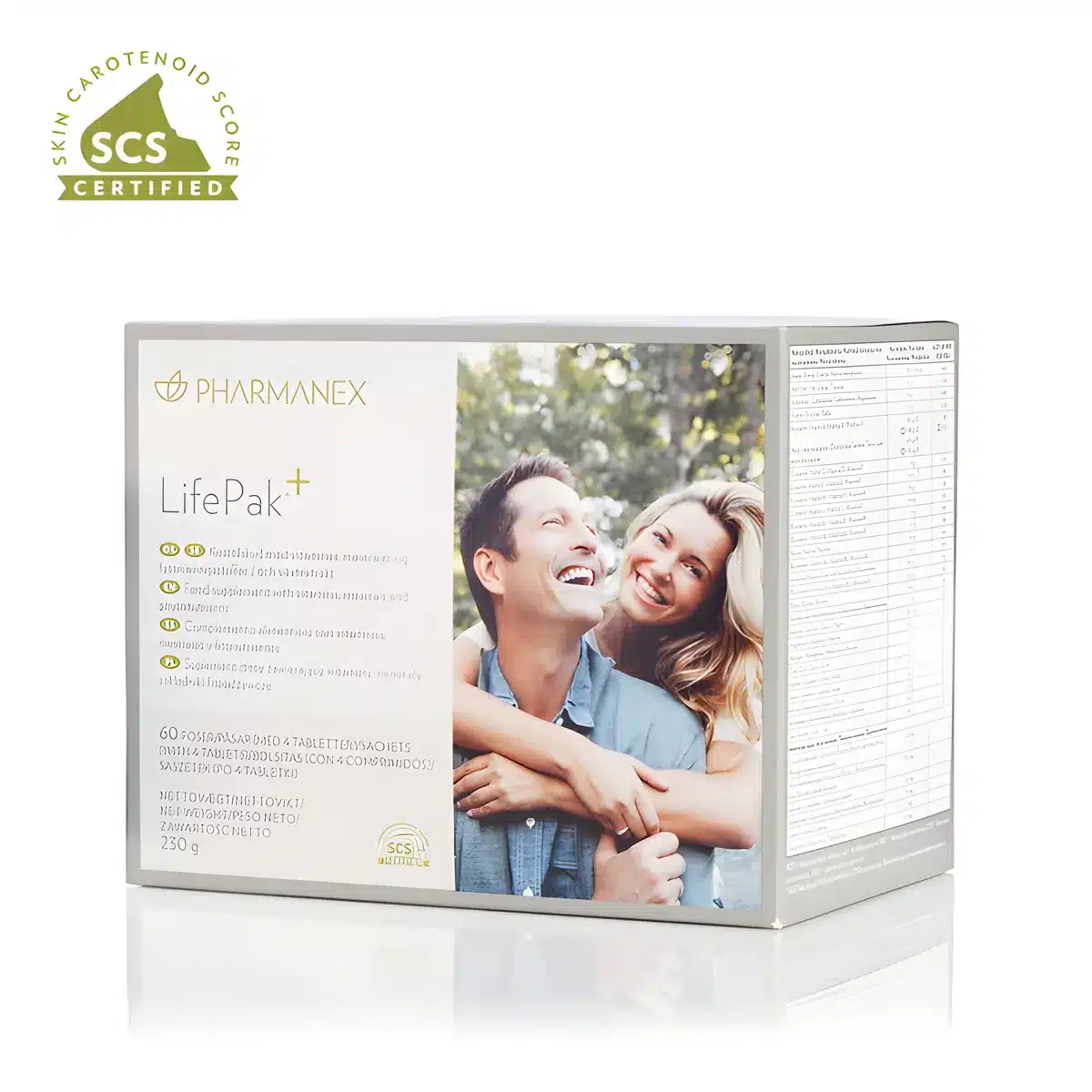
Yes. The South African Health Products Regulatory Authority (SAHPRA) regulates complementary medicines, including multivitamins. LifePak+ additionally holds SCS certification from NSF International — an independent quality verification beyond local regulatory requirements.
How is LifePak+ different from Centrum or Vital?
LifePak+ separates fat-soluble vitamins (soft-gel capsule) from water-soluble ones (tablet) in a dual-sachet format for optimised absorption. This bioavailability-focused approach is more scientifically rigorous than a single compressed tablet.
How long before I notice a difference?
Correcting a vitamin D deficiency typically takes 8-12 weeks. Some people notice improved energy within 2-4 weeks, particularly if B12 or iron was low. Consistency is the key factor.
This product is a health supplement, not a medicine. It is not intended to diagnose, treat, cure, or prevent any disease. Consult your healthcare professional before use.
Data sourced from SANHANES, South African Medical Research Council, and peer-reviewed research cited in text. Product information from official Nu Skin Pharmanex documentation.
Independent Nu Skin Brand Affiliate — not produced or endorsed by Nu Skin Enterprises Inc.