
2 April 2026
Year-Round Sunshine, Year-Round Vitamin D Deficiency? The Singapore Paradox

Singapore sits one degree north of the equator. Sunlight is abundant, intense, and consistent year-round — roughly 12 hours daily, with UV index regularly hitting 10+. And yet, research published in the Singapore Medical Journal estimates that 30–40% of the Singaporean population has insufficient vitamin D levels. A 2017 study at the National University of Singapore found that 73% of a healthy adult cohort had vitamin D levels below 30 ng/mL.
How does a tropical nation with unlimited sunshine end up with a vitamin D problem? The answer tells us something important about modern lifestyles and micronutrient needs — and it applies to more nutrients than just vitamin D.
Why Singapore has micronutrient gaps despite great food
Singapore's hawker culture provides extraordinary dietary variety. But variety in flavour doesn't automatically mean variety in micronutrients. The 2018 National Nutrition Survey conducted by the Health Promotion Board found that only 3 in 10 Singaporeans meet the recommended daily intake of fruits and vegetables. Calcium intake is well below recommendations, with the average Singaporean consuming about 627mg daily against a recommended 800mg.
The vitamin D paradox has a clear explanation: Singaporeans spend the vast majority of their time indoors. Air-conditioned offices, shopping centres, and MRT commutes mean minimal UV exposure despite abundant sunshine. Add strong sunscreen use (appropriate for skin cancer prevention) and clothing that covers most skin, and vitamin D synthesis drops dramatically regardless of latitude.
We found this genuinely surprising when we first looked at the data. The assumption that tropical countries don't have vitamin D problems is widespread — and wrong.
The immune system and micronutrients: what the evidence supports
Singapore's tropical climate brings its own health considerations — dengue, respiratory infections in air-conditioned environments, and a dense urban population. The body's immune defences rely on specific micronutrients to function optimally:
Vitamin D is now recognised as an immunomodulator, not just a bone-health nutrient. Research published in the British Medical Journal (2017) showed that vitamin D supplementation reduced the risk of acute respiratory tract infections, with the strongest effect in those who were most deficient. Given Singapore's deficiency rates, this is directly relevant.
Vitamin C requirements may be higher in tropical environments. While severe deficiency (scurvy) is rare in Singapore, marginal deficiency — not enough for optimal immune function — is harder to detect and may be more common. The recommended daily intake of 105mg for adults can be met through diet, but regular fruit and vegetable intake below recommended levels puts many Singaporeans in the marginal zone.
Zinc status in Singapore hasn't been as extensively studied as vitamin D, but regional data from Southeast Asian populations suggests suboptimal intake in those with rice-heavy diets, as rice is relatively low in bioavailable zinc. The HPB recommends 11mg daily for men and 8mg for women.
Antioxidants and oxidative stress in a tropical climate
Oxidative stress — the imbalance between free radical production and antioxidant defence — is influenced by UV exposure, air quality, and metabolic factors. Singapore's high UV environment and urban pollution create a case for adequate antioxidant intake.
The key dietary antioxidants are vitamins C and E, selenium, and carotenoids (beta-carotene, lycopene, lutein). These work synergistically — vitamin C regenerates vitamin E after it neutralises a free radical, selenium is a cofactor for glutathione peroxidase (the body's primary antioxidant enzyme), and carotenoids protect cell membranes from lipid peroxidation.
We're not suggesting that antioxidant supplements are a substitute for a diet rich in colourful fruits and vegetables. They're not. But for the 70% of Singaporeans who don't eat enough produce, a multivitamin containing these antioxidants provides a baseline that diet alone isn't meeting.

9 Body Functions Supported by LifePak
Based on established nutritional science for the vitamins and minerals in LifePak. Source: Nu Skin Pharmanex documentation.
How LifePak compares to popular Singapore multivitamins
| Criteria | LifePak | Blackmores Multivitamins + Minerals | Centrum Advance | Swisse Ultivite |
|---|---|---|---|---|
| Number of nutrients | 20+ | 22 | 24 | 36 (incl. herbs) |
| Format | Dual sachet (tablet + soft-gel) | Single tablet | Single tablet | Single tablet |
| Antioxidant blend | Yes — C, E, selenium, carotenoids | Yes — C, E | Yes — C, E | Yes — with herbal antioxidants |
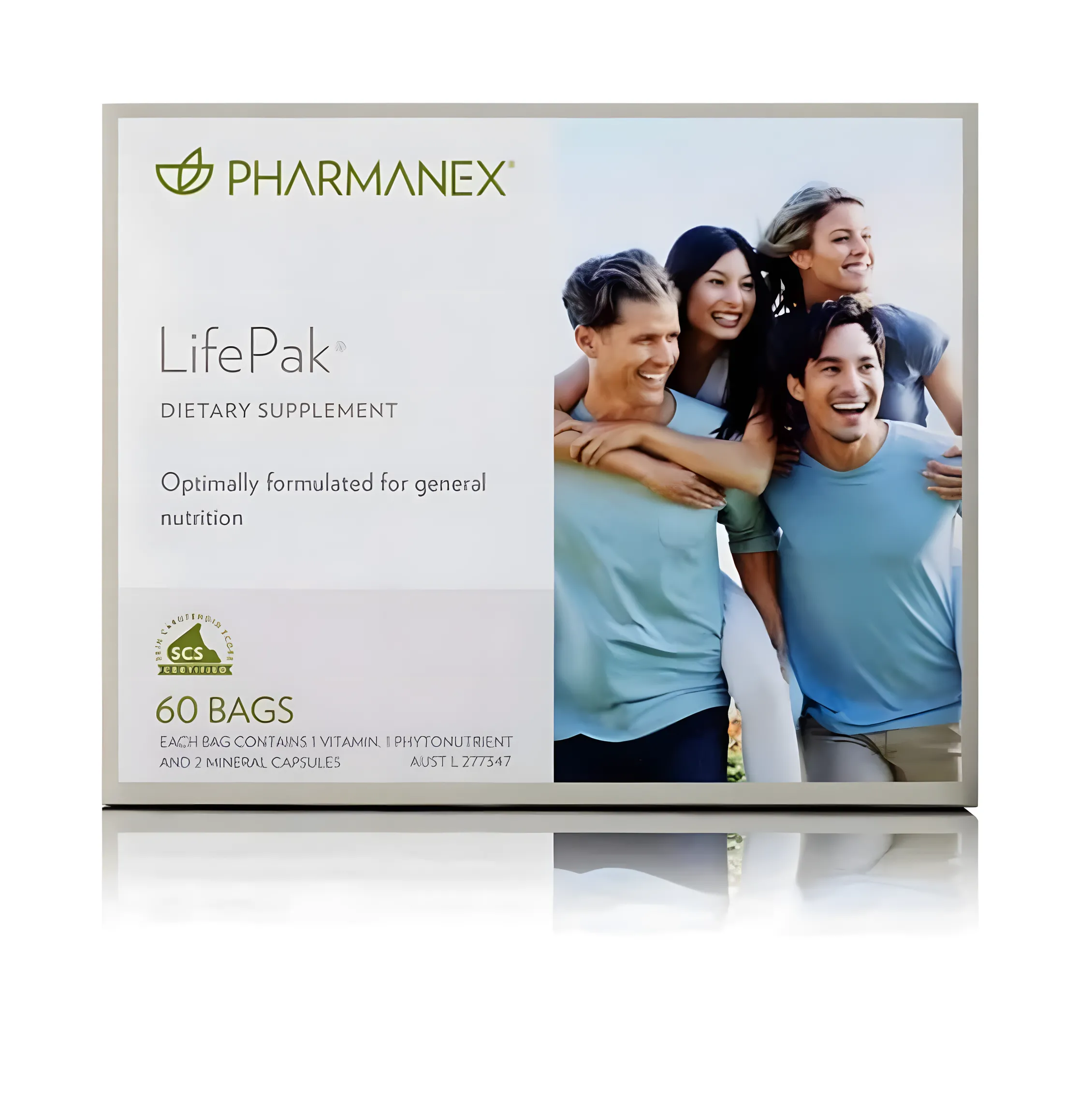
| Third-party certified | SCS (NSF) | GMP | GMP | GMP |
| Bioavailability design | Fat/water-soluble separated | Combined tablet | Combined tablet | Combined tablet |
Frequently asked questions
How can Singaporeans be vitamin D deficient with so much sunshine?
The vast majority of daily life in Singapore happens indoors — air-conditioned offices, malls, MRT. When outdoors, sun protection (correctly used for skin cancer prevention) blocks UV-B, the wavelength needed for vitamin D synthesis. A 2017 NUS study found 73% of healthy adults had insufficient vitamin D despite equatorial sun exposure.
Is a multivitamin necessary if I eat at hawker centres regularly?
Hawker food provides excellent variety and flavour, but the 2018 National Nutrition Survey found that 70% of Singaporeans don't eat enough fruits and vegetables. Common hawker meals can be high in sodium and refined carbohydrates while low in specific micronutrients like calcium, vitamin D, and selenium. A multivitamin fills those specific gaps.
How does LifePak compare to single-ingredient supplements?
Taking individual supplements (vitamin D, vitamin C, zinc separately) gives you precise control over each dose but requires multiple products and higher total cost. LifePak provides a comprehensive formula in one daily sachet, covering multiple gaps simultaneously. For most people, convenience and consistency are practical advantages.
Are supplements regulated by HSA in Singapore?
Health supplements in Singapore are regulated under the Health Supplements Guidelines by the Health Sciences Authority (HSA). Products must comply with safety and labelling requirements. LifePak additionally holds SCS certification from NSF International, an independent quality verification beyond local regulatory requirements.
This product is a health supplement, not a medicine. It is not intended to diagnose, treat, cure, or prevent any disease. Consult your healthcare professional before use if you have any pre-existing medical conditions.
Data sourced from Singapore Health Promotion Board National Nutrition Survey (2018), National University of Singapore vitamin D research (2017), and peer-reviewed publications cited in text. Product information from official Nu Skin Pharmanex documentation.
Independent Nu Skin Brand Affiliate — not produced or endorsed by Nu Skin Enterprises Inc.