Authorised Independent Nu Skin Distributor
Renu Hair Mask (NZ)
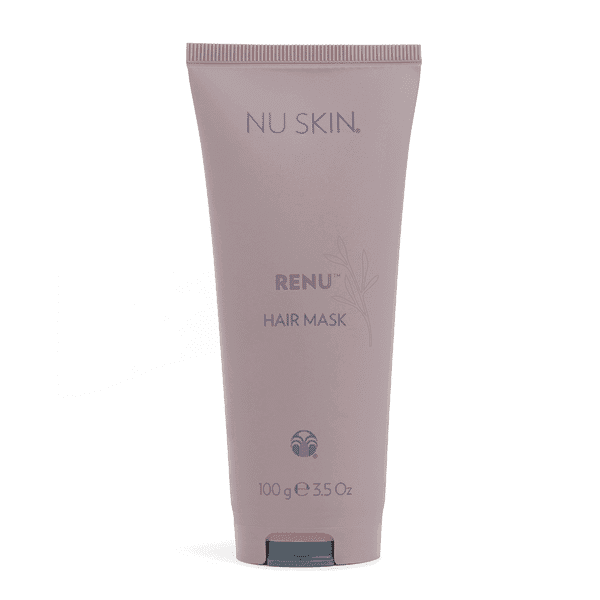
Product Description
Canterbury's nor'wester winds can strip moisture from hair faster than any conditioner can replace it. Combined with New Zealand's intense UV (regularly hitting 12+ in summer), saltwater from weekend beach trips, and the daily heat styling that keeps hair looking polished through Wellington's unpredictable weather, your hair needs more than surface-level conditioning. Nu Skin ReNu Hair Mask delivers intensive repair where it counts: deep within the hair shaft, where structural damage accumulates and regular conditioners simply cannot reach. At NZ$37 for weekly treatment, it's the difference between managing damaged hair and actually repairing it.
Who It's For
Best suited for: Hair showing visible damage from UV exposure, saltwater, heat styling, or chemical processing. Particularly effective for hair that feels rough, breaks easily, or lacks shine despite regular conditioning. Essential for anyone spending time outdoors in New Zealand's harsh UV environment.
Less suited for: Fine hair that becomes limp with heavy conditioning, or healthy hair that responds well to daily conditioner alone. Oily scalp types should apply mid-length to ends only.
Pairs well with: ReNu Smoothing Shampoo for daily cleansing and ReNu Hair Oil for heat protection before styling.
What Makes ReNu Hair Mask Different
The fundamental difference lies in penetration time and molecular weight. Daily conditioners work on the hair surface during a 2-minute rinse cycle — sufficient for detangling and surface smoothing, but inadequate for structural repair. The ReNu Hair Mask's 5-10 minute contact time allows larger conditioning molecules to penetrate beyond the cuticle into the cortex, where actual damage occurs.
The mask contains hydrolysed keratin proteins specifically sized to enter damaged areas within the hair shaft. During the extended application time, these proteins bind to weakened sections, reinforcing the internal structure that determines whether hair breaks under mechanical stress (brushing, towelling, styling). The deep conditioning complex simultaneously replenishes the lipid layer that UV and heat strip away, restoring the moisture barrier that keeps hair flexible rather than brittle.
Nu Skin's testing demonstrates treated hair requires significantly more force to break compared to untreated damaged hair — a measurable improvement in structural integrity that surface conditioners cannot achieve.
How It Compares
| Product | Contact Time | Repair Focus | Price per Use |
|---|---|---|---|
| Nu Skin ReNu Hair Mask | 5-10 minutes | Deep cortex repair + cuticle sealing | NZ$2.50 |
| Trilogy Rosehip Hair Mask | 10-20 minutes | Surface moisturising | NZ$3.20 |
| Essano Argan Oil Hair Mask | 5 minutes | Basic conditioning | NZ$1.80 |
| Schwarzkopf BC Repair Rescue Deep Nourishing Treatment | 5-10 minutes | Protein reconstruction | NZ$4.50 |
Does ReNu Hair Mask ship to my address in New Zealand?
Yes — all orders ship from Nu Skin New Zealand's Auckland warehouse. Standard shipping is NZ$4.99 (free on orders over NZ$99). Most addresses across New Zealand receive delivery within 2-5 business days. Rural delivery (RD) addresses may require an additional day. Order directly from nubestskin.com/nz with no registration required.
How often should I use the hair mask instead of regular conditioner?
Use weekly as a replacement for your regular conditioner, not in addition to it. For severely damaged hair (frequent heat styling, recent chemical processing, excessive sun/saltwater exposure), twice weekly is acceptable initially. Once hair condition improves, return to weekly maintenance. Over-conditioning can make hair limp and weigh it down.
Will this work on chemically straightened or keratin-treated hair?
Yes — the mask is safe for chemically treated hair and often necessary, as chemical processing strips natural moisture and creates structural weak points. The hydrolysed keratin won't interfere with existing chemical treatments. Many clients find it essential for maintaining hair health between salon visits.
Can I use this on coloured hair without affecting the dye?
The mask is specifically formulated to be gentle on colour-treated hair. The deep conditioning actually helps seal the cuticle, which can help preserve colour longevity by preventing colour molecules from washing out through damaged cuticle gaps. Many colourists recommend intensive conditioning masks to maintain colour vibrancy.
Is this available at Chemist Warehouse or Life Pharmacy in New Zealand?
Nu Skin ReNu Hair Mask is exclusively available through Nu Skin's direct distribution. You won't find it at Chemist Warehouse NZ, Life Pharmacy, or other retail outlets. This ensures product freshness and authenticity while maintaining the competitive pricing that direct distribution allows.
What's the difference between this and a protein treatment?
Protein treatments focus primarily on structural repair using larger protein molecules. The ReNu Hair Mask combines protein repair (via hydrolysed keratin) with deep moisture replacement, making it suitable for regular use. Pure protein treatments can make hair brittle if overused; this mask balances protein with conditioning agents for ongoing weekly maintenance.
How long does one tube typically last?
With weekly use on shoulder-length hair, expect 12-15 applications per tube. Longer or thicker hair will reduce this to 8-10 uses. The key is using enough product to saturate the hair shaft — skimping on application reduces effectiveness. Focus on mid-length to ends where damage is most concentrated.
Can I leave it on longer than 10 minutes for extra conditioning?
Extended contact time beyond 10 minutes doesn't significantly improve results once the hair has absorbed maximum conditioning agents. Leaving it on longer may make hair feel heavy or limp without additional benefit. The 5-10 minute window is optimised for maximum penetration without over-conditioning.
Works With
- ReNu Smoothing Shampoo — Gentle cleansing for damaged hair
- ReNu Smoothing Conditioner — Daily maintenance between mask treatments
- ReNu Hair Oil — Heat protection and finishing
Sources & References
1. Nu Skin. ReNu Hair Mask clinical testing data and product specifications, 2024.
2. Robbins, C.R. Chemical and Physical Behavior of Human Hair, 5th Edition. Springer, 2012.
3. New Zealand Dermatological Society. UV radiation and hair damage prevention guidelines, 2023.
Independent Nu Skin Brand Affiliate — not produced or endorsed by Nu Skin Enterprises Inc.
Why Buy from NuBest Skin?
No registration needed — shop and purchase directly, no account setup required.
Shipped from official Nu Skin warehouse — 100% authentic, factory-sealed products with full warranty.
Competitive pricing — we offer great value on authentic Nu Skin products.
Nu Skin product purchasing channels for New Zealand -- relationship, invoice, warranty, warehouse fulfilment, and marketplace-risk guidance.