
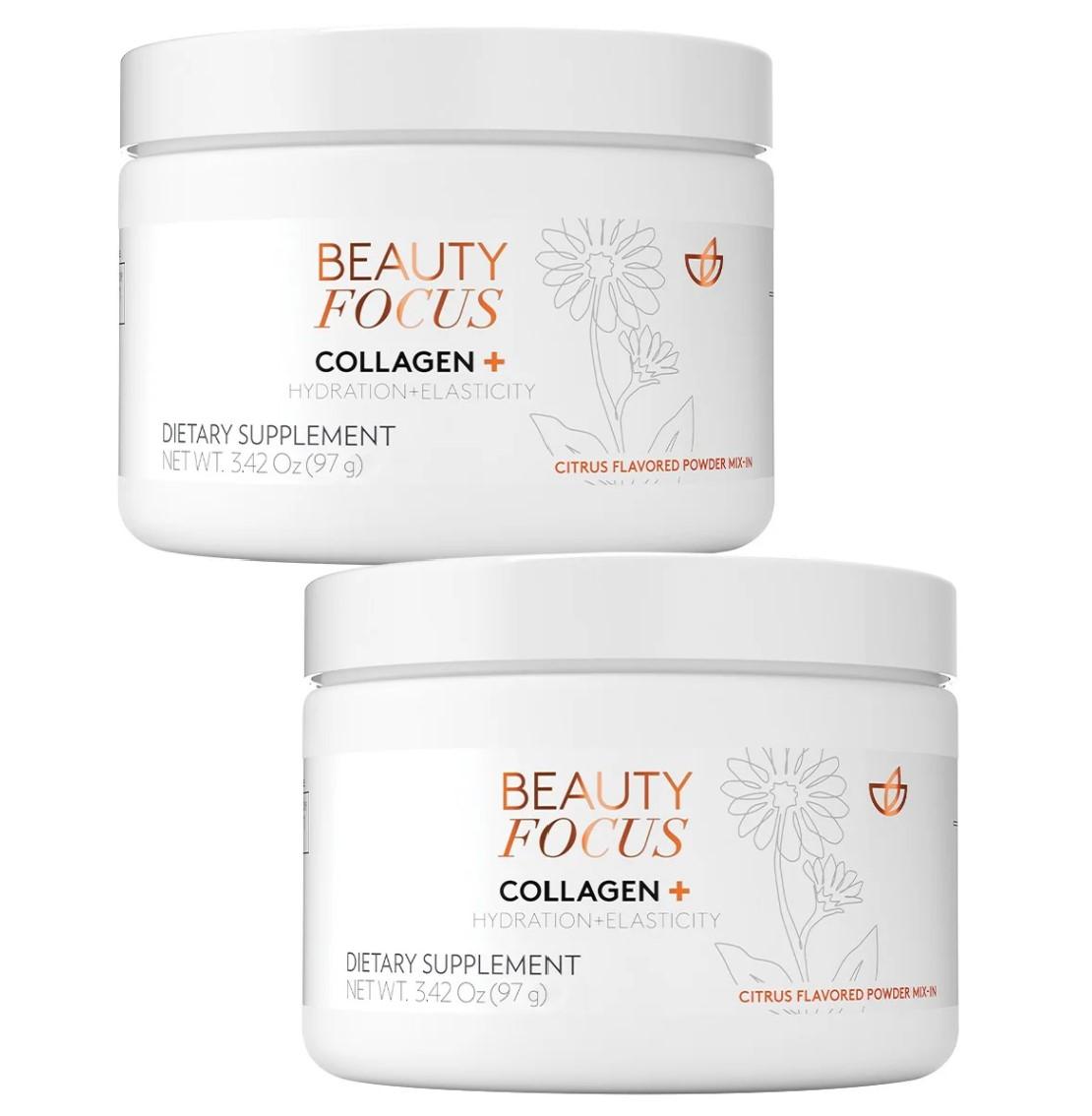
Beauty Focus Collagen+: A Revolutionary Skin Care Supplement to improve your Skin quality
Published 20 June 2023 · Updated 5 July 2026
New Zealand's Hidden Skin Threat: Why Kiwi Collagen Degrades Faster Than You Think
Most New Zealand women know to wear sunscreen. Fewer understand what is actually happening beneath the skin's surface when that UV index climbs to 13 in an Auckland December — a reading that would be extraordinary in London or Paris, but is simply a Tuesday in Tāmaki Makaurau. New Zealand sits beneath one of the most significantly depleted regions of the stratospheric ozone layer, meaning Kiwis receive between 20 and 40 per cent more UV radiation than people at equivalent latitudes in the Northern Hemisphere. That is not a cosmetic statistic. At a cellular level, UV radiation — particularly UVA — penetrates the dermis and activates matrix metalloproteinases (MMPs), enzymes that directly break down the collagen fibres responsible for skin firmness and elasticity. Each summer day, this process quietly dismantles dermal scaffolding that your body is already struggling to replace. Collagen production begins declining around age 25 and falls by roughly one per cent per year through your forties. Layered onto that natural decline, New Zealand's UV environment means Kiwi women are facing a compounded collagen deficit that most conversations about skincare never fully address. Beauty Focus Collagen+ was formulated specifically for this kind of internal, UV-accelerated collagen loss.
Why Beauty Focus Collagen+ Works Where Creams Cannot
Walk into any pharmacy in Wellington or Christchurch and you will find shelves stocked with collagen creams, collagen serums, and collagen-infused moisturisers. There is a fundamental biological problem with every single one of them: collagen molecules are too large to penetrate the skin barrier. The average collagen molecule measures between 285,000 and 300,000 Daltons. The skin's stratum corneum selectively admits substances below approximately 500 Daltons. No collagen cream, regardless of its price or marketing claims, can deliver intact collagen to the dermis. It sits on the surface and is washed away.
Oral supplementation works through a completely different pathway. Beauty Focus Collagen+ delivers hydrolysed marine collagen peptides with a molecular weight of between 1,000 and 3,000 Daltons — small enough to be efficiently absorbed through the intestinal wall. Once digested, these peptides are broken down further into bioactive di- and tri-peptides, primarily Pro-Hyp (proline-hydroxyproline) and Hyp-Gly (hydroxyproline-glycine). These specific sequences are detected by fibroblast receptors in the dermis, where they stimulate the body's own collagen-synthesising machinery — a process known as fibroblast upregulation. The body is prompted to produce new collagen and hyaluronic acid from within, rather than having a surface ingredient attempt to substitute for it from outside.
A double-blind clinical study conducted by Nu Skin involving 51 participants over 12 weeks found that 90 per cent of participants showed measurable improvements in skin firmness by week 12, that hydration improvements were measurable as early as week 4, and that participants experienced an average 21 per cent increase in skin hydration (measured via corneometer) and a 25 per cent reduction in wrinkle depth as measured by silicone replica analysis. These outcomes reflect an inside-out mechanism that topical products are structurally incapable of replicating.
What Is Inside Each Sachet: Key Ingredients Explained
Hydrolysed Marine Collagen Peptides — 2.5 g
Sourced from fish, these low molecular weight peptides (1,000–3,000 Daltons) represent the delivery mechanism at the core of the formula. The hydrolysis process pre-breaks the collagen chains into peptide fragments that the gut can absorb efficiently. Research published in peer-reviewed journals has confirmed that orally ingested collagen peptides do accumulate in skin tissue following absorption, rather than being broken down entirely into individual amino acids as was once assumed. The 2.5 g dose per sachet aligns with dosage ranges examined in published clinical research on skin outcomes.
Lutein — 2 mg
Lutein is a carotenoid antioxidant most commonly associated with eye health, but its role in skin is increasingly well-documented. In the context of New Zealand's UV environment, lutein's ability to quench singlet oxygen and neutralise free radicals generated by photooxidative stress is particularly relevant. UV-induced oxidative damage is one of the primary triggers for MMP activation — the same enzymatic process that breaks down dermal collagen. By addressing photooxidative stress internally, lutein provides a layer of protection that sunscreen, which acts externally, does not replicate at the cellular level.
Zinc — 4 mg
Zinc is an essential cofactor for the enzymes involved in collagen synthesis, including prolyl hydroxylase and lysyl oxidase, which are required to stabilise the collagen triple-helix structure. Without adequate zinc, collagen fibres are structurally weaker and cross-link less effectively. Zinc also plays a role in normal skin cell maintenance and wound repair. The 4 mg inclusion in each sachet contributes meaningfully to daily zinc requirements in support of these functions.
Vitamin C — 35 mg
Vitamin C is not optional in collagen synthesis — it is biochemically required. The hydroxylation of proline and lysine residues, the step that allows individual collagen chains to twist into a stable triple-helix, is catalysed by vitamin C-dependent enzymes. Without sufficient vitamin C, collagen synthesis stalls. The 35 mg included per sachet works synergistically with the marine collagen peptides, supporting the body's ability to process and build upon the peptide signals arriving from the gut.
Polysaccharides and Hyaluronic Acid Precursors
The formula also includes polysaccharide compounds that support the dermal hydration matrix. Hyaluronic acid in the dermis is responsible for retaining water within skin tissue — it can hold up to 1,000 times its own weight in water. Supporting the precursor environment for hyaluronic acid production complements the hydration outcomes reflected in the clinical study data above.
Three New Zealand Scenarios Where Internal Collagen Support Matters Most
- Auckland Summer — UV Index Reaching 13 and Beyond: For Aucklanders, summer is not just warm — it is UV-intense in a way that visitors from Europe or North America are often unprepared for. A UV index of 13 is classified as extreme, and it is routine in the upper North Island from November through to March. Even with sunscreen applied correctly, a portion of UVA radiation penetrates to the dermis and activates the MMP enzymes that degrade collagen. Women spending time outdoors — whether in the Domain, at Mission Bay, or simply commuting — are experiencing cumulative dermal collagen loss that topical products cannot undo. Supplementing with Beauty Focus Collagen+ provides nutritional support for the body's internal repair and synthesis processes during this ongoing UV exposure.
- Wellington Wind, Weather, and the Windy City's Skin Toll: Wellingtonians take pride in their resilience against the wind — but that same environmental exposure creates persistent transepidermal water loss and chronic low-grade skin stress that many dismiss as just "having dry skin." The capital's notorious southerly gusts, combined with temperature fluctuations and high outdoor activity participation, mean that the dermis is under near-constant environmental pressure. Collagen and hyaluronic acid are central to the skin's structural capacity to maintain hydration and elasticity under these conditions. For Wellingtonians who spend time outdoors in Zealandia, along the waterfront, or on the harbour, consistent internal collagen support addresses the layer of the skin that wind protection alone cannot reach.
- Queenstown: UV at Altitude, Year-Round: Queenstown outdoor enthusiasts face a compounded UV challenge that is unique even within New Zealand. At altitude, there is less atmospheric mass to filter UV radiation, meaning UV intensity is meaningfully higher than at sea level. In winter, UV reflects off snow and ice at Coronet Peak or The Remarkables, creating a dual-exposure environment. In summer, hiking the Ben Lomond Track or cycling the Arrow River trail involves sustained UV exposure at elevation. Skiers, snowboarders, and hikers in this region are among the most UV-exposed people in the Southern Hemisphere. Lutein's photooxidative protection, combined with the fibroblast-stimulating action of marine collagen peptides, makes Beauty Focus Collagen+ a particularly well-matched supplement for the Queenstown lifestyle.
How Beauty Focus Collagen+ Compares to NZ Collagen Supplements
| Feature | Beauty Focus Collagen+ | Thompson's Collagen (NZ/AU) | Go Healthy Go Collagen (NZ) | Healtheries Beauty Collagen (NZ) |
|---|---|---|---|---|
| Format | Liquid sachet (ready-to-drink) | Capsule / tablet | Capsule | Powder sachet |
| Collagen peptide dose per serving | 2,500 mg (2.5 g) | Typically 400–1,000 mg | Typically 500–1,000 mg | Typically 2,500 mg (varies by SKU) |
| Peptide molecular weight specified | Yes — 1,000–3,000 Daltons (low MW) | Not typically disclosed | Not typically disclosed | Not consistently disclosed |
| Lutein inclusion (photooxidative protection) | Yes — 2 mg per serving | Not present in standard formulation | Not present in standard formulation | Not present in standard formulation |
| Vitamin C included (collagen synthesis cofactor) | Yes — 35 mg per serving | Some formulations include it | Some formulations include it | Some formulations include it |
| Zinc included (collagen enzyme cofactor) | Yes — 4 mg per serving | Not consistently present | Not consistently present | Not consistently present |
| Published clinical study (skin outcomes) | Yes — double-blind, 51 participants, 12 weeks | Relies on general ingredient research | Relies on general ingredient research | Relies on general ingredient research |
| Collagen source | Marine (fish-derived) | Marine or bovine (varies) | Marine or bovine (varies) | Marine (typically) |
Note: Formulation details for competitor products are based on publicly available product labelling and may vary by SKU or reformulation. Comparisons reflect formulation composition differences only.
Frequently Asked Questions
Is Beauty Focus Collagen+ available in New Zealand, and how long does shipping take?
Yes. Beauty Focus Collagen+ ships to New Zealand addresses through the official Nu Skin warehouse. Delivery to main centres — including Auckland, Wellington, Christchurch, Hamilton, Tauranga, and Dunedin — typically takes between 3 and 7 business days. You can order directly through the NuBest Skin product page at More Articles