
16 March 2026
The Science of Skin Ageing in Ireland's Climate — and What Collagen+ Actually Does
Why Irish Skin Faces Its Own Set of Challenges
If you live in Ireland, you know the drill. Grey skies, a persistent drizzle, and the kind of damp cold that settles into your bones by October and doesn't fully lift until May. It's easy to assume that without scorching Mediterranean sun, our skin has it relatively easy. But that assumption is worth questioning.
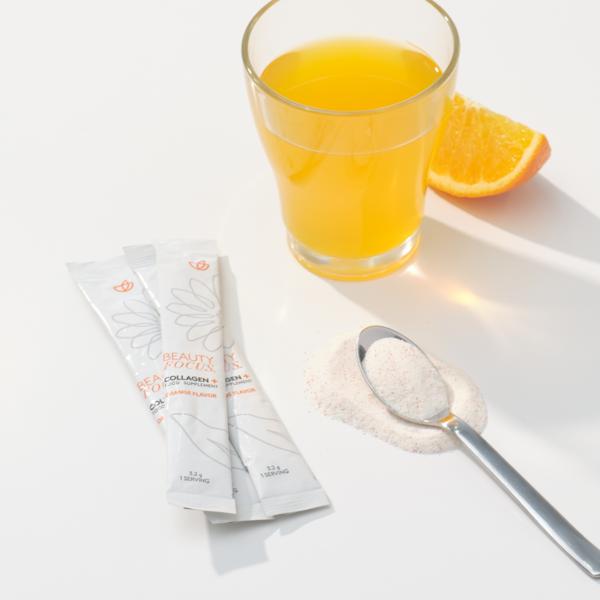
We've been following Nu Skin's collagen research for a while, and the reformulated Beauty Focus Collagen+ is genuinely different from earlier versions. Ireland's climate presents a distinctive combination of stressors that most skincare advice simply doesn't account for. The constant humidity paired with indoor central heating creates a push-pull effect on the skin's moisture barrier. Add in the fact that many of us spend the bulk of our day in front of screens — whether in Dublin offices, Cork co-working spaces, or working from the kitchen table — and the picture gets more complicated.
There's been a noticeable shift in how people across Ireland think about health and wellness. The interest in evidence-based supplements has grown considerably, moving well beyond the old multivitamin-on-the-counter approach. So when it comes to collagen supplements and skin health, what does the science actually tell us?
Understanding Collagen: The Structural Foundation of Your Skin
Think of collagen as the scaffolding of a building. Just as steel and concrete provide the structural framework that keeps a building standing, collagen provides the framework that gives skin its firmness, bounce, and resilience. Without adequate scaffolding, the building sags. The same principle applies to skin.
Collagen is the most abundant protein in the human body, and your skin relies on it heavily. Between 75% and 80% of the skin's dry weight is collagen, predominantly Type I collagen. It forms a dense, interwoven network in the dermis — the layer beneath the surface — that supports everything you see in the mirror.
The Decline Begins Earlier Than You'd Think
From roughly age 25, your body's collagen production begins to slow. The rate of decline is approximately 1% to 1.5% per year. That might sound modest, but it compounds. By the time you reach your mid-forties, you may have lost a quarter or more of the collagen density you had in your twenties.
Several factors accelerate this process, and some are particularly relevant to life in Ireland:
- UV exposure — and yes, this applies even on overcast Irish days. Up to 80% of UV radiation penetrates cloud cover, which means cumulative sun damage happens year-round, not just on the rare sunny afternoon in Galway.
- Blue light from screens — emerging research suggests that high-energy visible (HEV) light from phones, laptops, and monitors may contribute to oxidative stress in skin cells. Given how screen-dependent modern Irish life has become, this is worth paying attention to.
- Dietary factors — high sugar intake triggers a process called glycation, which essentially stiffens and fragments collagen fibres, reducing their effectiveness.
- Chronic stress — elevated cortisol levels have been shown to inhibit collagen synthesis and accelerate the breakdown of existing collagen structures.
Collagen decline by age
Based on estimated 1–1.5% annual decline from age 25. Individual results vary.
What the Research Actually Says About Collagen Supplements
Let's be straightforward here. The supplement industry is awash with bold claims, and a healthy dose of scepticism is warranted. So rather than relying on marketing language, let's look at what peer-reviewed research has found.
A Large-Scale Meta-Analysis (2023)
A comprehensive meta-analysis published by Pu et al. in the journal Nutrients in 2023 examined 26 randomised controlled trials (RCTs) involving 1,721 participants. This is a substantial body of evidence. The analysis concluded that oral collagen peptide supplementation was associated with statistically significant improvements in skin hydration, elasticity, and the appearance of wrinkles compared to placebo groups.
What makes this meta-analysis notable is its scale and the rigour of the included studies. RCTs are the gold standard in clinical research, and having 26 of them pointing in a consistent direction carries real weight.
A Recent Clinical Trial (2024)
A 2024 clinical trial published by Reilly in Dermatology Research and Practice provided more specific numbers. Over the study period, participants taking collagen peptides showed a 13.8% improvement in skin hydration and a 22.7% improvement in skin elasticity. These are meaningful, measurable differences — not the sort of marginal gains that could be chalked up to wishful thinking.
Why Hydrolysed Peptides Matter
Not all collagen supplements are created equal, and the form matters enormously. Whole collagen molecules are large — too large to be efficiently absorbed through the gut lining. Hydrolysed collagen peptides, by contrast, are broken down into much smaller fragments that can be absorbed into the bloodstream and distributed to the skin.
Research using isotope-labelled collagen peptides has confirmed that these fragments do indeed reach the dermis, where they appear to stimulate fibroblasts — the cells responsible for producing new collagen, elastin, and hyaluronic acid. In other words, it's not just about replacing lost collagen; it's about signalling your body to produce more of its own.
A Closer Look at Beauty Focus Collagen+
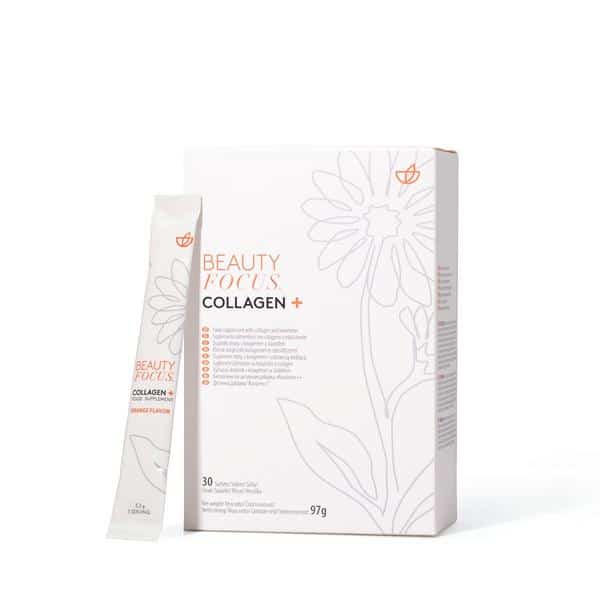
With the scientific context established, it's worth examining a specific formulation that has been designed with these research findings in mind. Beauty Focus Collagen+ takes a three-pronged approach, combining collagen peptides with two complementary active ingredients.
Bioactive Collagen Peptides (2,500 mg)
The foundation of the formula is 2,500 mg of bioactive collagen peptides with a specific peptide fingerprint. This isn't generic collagen powder — the peptide profile has been selected for its demonstrated ability to reach the skin and stimulate the cellular processes involved in collagen renewal. The dosage aligns with the ranges used in successful clinical trials.
Lutein (5 mg) from Marigold Flowers
Lutein is a carotenoid antioxidant naturally found in marigold flowers, and its inclusion here is particularly thoughtful. Beyond its well-documented role in eye health, lutein has been shown to provide protection against oxidative damage from blue light — high-energy visible light emitted by our ever-present screens.
For anyone in Ireland spending hours each day on a laptop or scrolling through their phone (and let's be honest, that's most of us), this ingredient addresses a very modern skin concern. Lutein accumulates in the skin, where it acts as an internal filter against HEV light damage.
Phytoceramides (70 mg) from Wheat Germ Extract
Honestly, the addition of ceramides surprised us — most collagen supplements stop at peptides. Ceramides are lipid molecules that form a crucial part of the skin's moisture barrier — think of them as the mortar between the bricks of your skin cells. When this barrier is compromised, moisture escapes and irritants get in. Anyone who has stepped off a bus into driving Irish rain and then into a centrally heated office knows how quickly skin can feel tight, dry, and unsettled.
Phytoceramides derived from wheat germ extract work from the inside out to reinforce this barrier. The 70 mg dose provides plant-based ceramides that integrate into the skin's lipid matrix, helping to maintain hydration even when environmental conditions are working against you.
What the Product Study Found
A 120-day third-party clinical study involving 60 adults aged 40 to 60 evaluated the combined effect of these three ingredients. The study measured objective skin parameters — hydration levels, elasticity, and smoothness — using validated dermatological instruments. The results showed measurable improvements across all three metrics, supporting the rationale for the multi-ingredient approach.
✦ Key ingredients at a glance
- Bioactive Collagen Peptides (2,500 mg) — supports collagen and elastin production
- Lutein (5 mg from marigold flowers) — antioxidant protection, particularly against blue light
- Phytoceramides (70 mg from wheat germ) — supports the skin's moisture barrier
Making It Part of Your Routine
One thing the research is quite clear on: consistency matters far more than any single dose. Collagen supplementation is not an overnight solution. Most studies report meaningful results emerging between 8 and 12 weeks of daily use, with improvements continuing beyond that timeframe.
Practical Tips for Getting the Most From Supplementation
- Take it at the same time each day. Whether that's with your morning tea or as part of your evening wind-down, building it into an existing habit makes consistency easier.
- Pair it with good skincare basics. A collagen supplement works from the inside. Combining it with a quality moisturiser and daily SPF (yes, even in November in Donegal) means you're supporting your skin from both directions.
- Stay hydrated. Collagen needs water to function properly in the skin matrix. Irish weather might not make you feel thirsty, but adequate water intake remains essential.
- Mind your overall diet. Vitamin C is a co-factor in collagen synthesis. Ensuring you get enough through fruit and vegetables supports the process. Limiting sugar helps prevent glycation damage to existing collagen.
It's also worth noting that supplements work best as part of a broader approach to skin health. Sleep, stress management, and sun protection all play significant roles. No single product can compensate for consistently poor habits in these areas.
Frequently Asked Questions
Can I order Beauty Focus Collagen+ for delivery in Ireland?
Yes. Beauty Focus Collagen+ is available at €62.00 and ships directly from the official Nu Skin warehouse. No registration or membership is required — you can order directly through our website. Delivery is available throughout Ireland.
Does the product contain wheat allergens?
Yes. The phytoceramide component is derived from wheat germ extract. If you have a wheat allergy or coeliac disease, this product may not be suitable for you. If you are unsure, consult your healthcare provider before use.
Is a collagen supplement still beneficial if I don't get much sun exposure?
Absolutely. While UV damage is a significant driver of collagen breakdown, it is far from the only one. Natural ageing, blue light exposure, dietary factors, and stress all contribute to collagen decline regardless of sun exposure. In fact, the combination of extensive screen time and indoor heating that characterises much of Irish daily life creates its own set of skin challenges that collagen supplementation can help address.
How long before I notice a difference?
Based on the clinical research, most people begin to notice improvements in skin hydration and texture within 8 to 12 weeks of consistent daily use. Some individuals report noticing changes sooner, but it is important to set realistic expectations. Collagen renewal is a gradual biological process, not an instant fix.
We'd recommend starting with a single sachet daily for the first two weeks before moving to two. One thing we've noticed — consistency matters more than dosage. Two sachets a day for 90 days beats four sachets for 30.
No registration required — order directly from our website. Ships from the official Nu Skin warehouse at competitive pricing.
Product information and clinical references sourced from official Nu Skin Beauty Focus Collagen+ product documentation. Independent Nu Skin Brand Affiliate — not produced or endorsed by Nu Skin Enterprises Inc.
This product is a food supplement and should not be used as a substitute for a varied and balanced diet and a healthy lifestyle. Do not exceed the recommended daily dose.
This website is independently operated by an authorised Nu Skin distributor and is not produced, endorsed, or approved by Nu Skin Enterprises, Inc. Nu Skin® is a registered trademark of Nu Skin Enterprises, Inc.