
It’s necessary for you to understand how vitamin D influences your thyroid health. This vital nutrient not only contributes to bone strength but also plays a significant role in the production of thyroid hormones, which are critical for metabolism and overall energy levels. Low levels of vitamin D have been linked to thyroid dysfunction, including autoimmune conditions like Hashimoto’s disease. By ensuring adequate vitamin D intake, you can support your thyroid function and, in turn, promote better health and well-being.

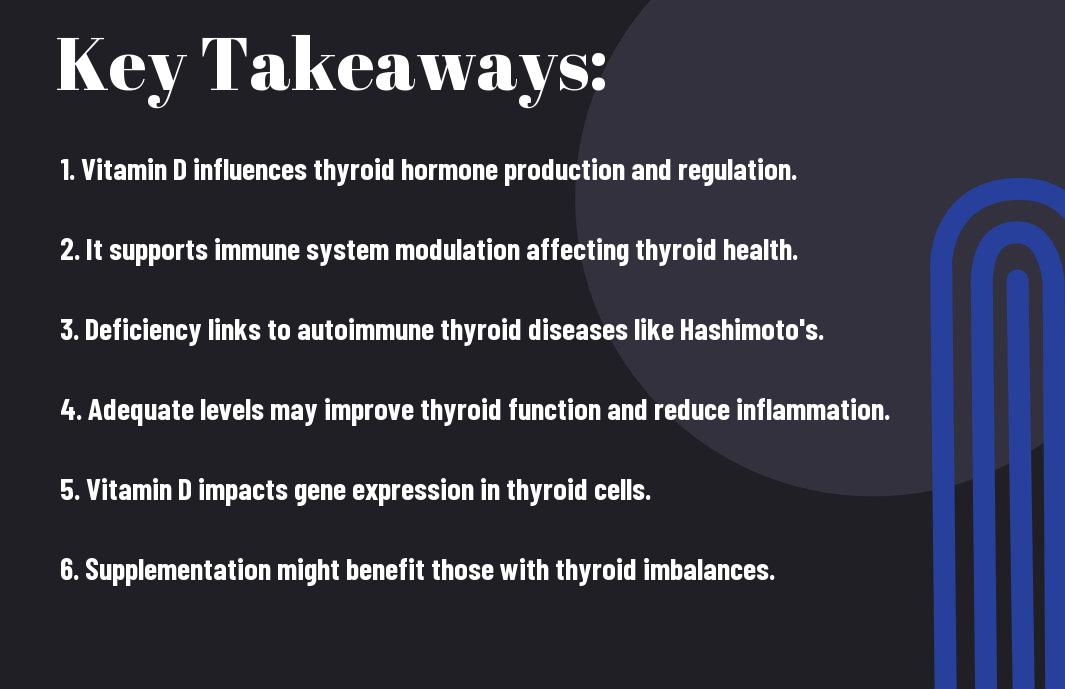
Key Takeaways:
- Vitamin D is vital for maintaining a balanced immune response, which can help reduce inflammation that may affect thyroid function.
- Studies suggest that adequate levels of vitamin D may correlate with improved thyroid hormone levels, indicating its potential role in supporting overall thyroid health.
- Deficiency in vitamin D has been linked to various thyroid disorders, highlighting the importance of monitoring and maintaining optimal vitamin D levels for thyroid support.
The Biochemical Connection Between Vitamin D and Thyroid Hormones
How Vitamin D Synthesizes in the Body
Your body produces vitamin D in response to sunlight exposure, specifically ultraviolet B (UVB) rays. This process begins when UVB rays strike your skin, converting a compound called 7-dehydrocholesterol into previtamin D3. After this initial step, the liver metabolizes previtamin D3 into calcidiol, also known as 25-hydroxyvitamin D. Finally, your kidneys convert calcidiol into the biologically active form, calcitriol (1,25-dihydroxyvitamin D), which then interacts with various tissues, including the thyroid gland. If you spend limited time outdoors or live in regions with minimal sunlight, your body may not synthesize adequate amounts of vitamin D, potentially impacting your thyroid function.
The Mechanism of Thyroid Hormone Production and Regulation
Thyroid hormones, mainly thyroxine (T4) and triiodothyronine (T3), are produced in the thyroid gland through a complex feedback system involving the hypothalamus and pituitary gland. The hypothalamus releases thyrotropin-releasing hormone (TRH), stimulating the pituitary gland to secrete thyroid-stimulating hormone (TSH). TSH then promotes the synthesis of T4 and T3 by encouraging the uptake of iodine in the thyroid follicles. Adequate levels of vitamin D may enhance the sensitivity of the thyroid gland to TSH, thereby optimizing hormone production. Additionally, vitamin D receptors, found in thyroid tissue, suggest a direct interaction that supports the synthesis of these hormones.
Research indicates that vitamin D deficiency may lead to reduced thyroid hormone levels, potentially resulting in conditions such as hypothyroidism. In contrast, sufficient vitamin D can ensure the proper functioning of the thyroid gland, allowing for a more balanced production of thyroid hormones critical for numerous bodily functions, including metabolism and mood regulation. Studies have shown that individuals with autoimmune thyroid diseases often exhibit lower levels of vitamin D, pointing towards a significant relationship between your vitamin D status and the health of your thyroid.
The Impact of Vitamin D Deficiency on Thyroid Function
Vitamin D deficiency can significantly alter thyroid function, potentially leading to a range of thyroid-related disorders. Research indicates that individuals with low levels of vitamin D often experience disruptions in thyroid hormone production and regulation. When your body lacks sufficient vitamin D, the synthesis and secretion of thyroid hormones may decline, ultimately affecting metabolic processes that depend on these hormones. For instance, studies have shown that individuals with low vitamin D levels display higher levels of thyroid-stimulating hormone (TSH), which can indicate a struggle in thyroid hormone production.
Correlations between Low Vitamin D Levels and Thyroid Disorders
Numerous studies have explored the connection between low vitamin D levels and thyroid disorders, revealing significant correlations. Individuals diagnosed with various forms of thyroid diseases, such as Hashimoto’s thyroiditis and Graves’ disease, often demonstrate a prevalence of vitamin D deficiency. Investigations have shown that about 70% of those with autoimmune thyroid disorders present with insufficient vitamin D levels. This correlation suggests that low vitamin D could play a role not only in the development of these disorders but also in the exacerbation of symptoms.
Specific Consequences for Hypothyroidism and Autoimmune Thyroid Disease
Hypothyroidism, characterized by an underactive thyroid gland, shows a particularly strong association with vitamin D deficiency. Without adequate vitamin D, your immune system may become compromised, which can complicate conditions like Hashimoto’s thyroiditis, where the immune system mistakenly attacks the thyroid. Furthermore, studies indicate that those with autoimmune thyroid disease have a higher likelihood of experiencing worsening symptoms during periods of seasonal or prolonged vitamin D deficiency, highlighting the critical nature of this nutrient in immune regulation.
The intertwining of vitamin D deficiency with hypothyroidism and related autoimmune diseases illustrates a worrying trend. For example, some studies suggest that supplementation with vitamin D in patients with Hashimoto’s thyroiditis not only improves vitamin D levels but may also help in reducing thyroid antibodies, leading to a more stable thyroid condition. This relationship underscores the importance of maintaining optimal vitamin D levels, particularly for those at risk of or already suffering from thyroid dysfunctions, enhancing both overall health and hormonal balance.
Vitamin D Supplementation: A Potential Game Changer for Thyroid Health
As you explore the relationship between vitamin D and thyroid health, the idea of supplementation becomes a compelling option. Many individuals with thyroid disorders report improvements in their symptoms after increasing their vitamin D levels. This raises the question: Can vitamin D supplementation genuinely make a difference in thyroid function? The growing body of research suggests that it may indeed be a game changer for those struggling with thyroid issues. Clinical trials have indicated that adequate vitamin D levels may enhance the conversion of the inactive thyroid hormone thyroxine (T4) to the active form (T3), thereby supporting optimal thyroid function.
Evidence-Based Research Supporting Supplementation
Several studies have highlighted the positive effects of vitamin D supplementation on thyroid health. For instance, one study observed that patients with autoimmune thyroid disease who took vitamin D supplements experienced a noticeable reduction in thyroid antibody levels. Other research has shown that those with suboptimal vitamin D levels often have poor thyroid function, suggesting that restoring adequate levels through supplementation may help normalize thyroid activity. Furthermore, a meta-analysis found a significant improvement in thyroid hormone levels among participants receiving vitamin D compared to those who did not, underscoring the necessity of maintaining sufficient vitamin D levels.
Guidelines for Safe and Effective Vitamin D Intake
Determining the recommended intake of vitamin D can vary based on age, sex, and current vitamin D levels. General guidelines suggest that adults should aim for a daily intake of 600 to 800 IU; however, some researchers advocate for higher doses, particularly for individuals with deficiencies. Regular monitoring of your vitamin D levels through blood tests can be invaluable in tailoring your supplementation strategy. Making use of both diet and sunlight exposure, along with supplements, can assist in achieving your desired levels without the risk of toxicity, which can occur with excessive vitamin D intake.
When considering your vitamin D intake, it’s vital to consult with a healthcare professional for personalized recommendations. Factors such as geographical location, skin type, and existing health conditions can all influence how much vitamin D you may require. Incorporating foods rich in vitamin D, such as fatty fish, mushrooms, and fortified dairy products, alongside sensible sun exposure can contribute positively to your overall vitamin D status. Additionally, understanding that individual needs may differ allows you to customize your approach, ensuring that you benefit from supplementation while minimizing potential risks.
Integrating Vitamin D for Optimal Thyroid Health
Dietary Sources and Lifestyle Changes for Increasing Vitamin D Levels
To boost your vitamin D levels, consider incorporating a variety of nutrient-rich foods into your diet. Fatty fish such as salmon, mackerel, and sardines are excellent sources, delivering substantial amounts of vitamin D in just a small serving. Additionally, fortified foods like dairy products and cereals can play a significant role in enhancing your intake. Egg yolks and beef liver are other options that should be included. Don’t overlook the importance of sunlight exposure, as just 15-30 minutes of direct sunlight daily can stimulate your body’s natural production of this vital nutrient, especially in warmer months.
In conjunction with dietary changes, embracing certain lifestyle shifts can further enhance your vitamin D levels. Regular outdoor activities, particularly during midday when UVB rays are most intense, can lead to better vitamin synthesis. If your lifestyle doesn’t allow for much sun exposure, vitamin D supplements might be an option worth considering. The suggested daily allowance for adults is around 600 to 800 IU, but those with low levels might need to adjust based on their healthcare provider’s guidance.
Monitoring Thyroid Function: The Role of Regular Check-Ups
Keeping a close eye on your thyroid function through regular check-ups can provide significant insights into your overall health, especially if you have concerns about vitamin D levels. Blood tests that measure TSH (thyroid-stimulating hormone) and thyroid hormone levels can help determine if your thyroid gland is functioning optimally. Depending on your results, your healthcare provider can suggest whether to modify your vitamin D intake or thyroid treatment plans. Tracking changes over time not only reinforces a proactive approach to health but also aids in catching potential thyroid-related complications early.
Routine testing can reveal underlying conditions that may not present obvious symptoms. If you are experiencing fatigue, weight changes, or mood fluctuations, you should consider discussing your thyroid health with your doctor. This collaborative effort can lead to more personalized care, ensuring both your vitamin D levels and thyroid function are supported effectively. Such vigilance can help maintain and improve your overall health and well-being, granting you peace of mind as you navigate your wellness journey.
Expert Insights: Perspectives from Endocrinologists
Current Consensus on Vitamin D and Thyroid Health
Endocrinologists generally uphold that adequate levels of vitamin D can play a significant role in enhancing thyroid function. Many studies suggest a correlation between low levels of vitamin D and thyroid disorders, particularly autoimmune conditions such as Hashimoto’s thyroiditis. It’s noted that individuals with autoimmune thyroid disease often exhibit lower serum vitamin D levels compared to healthy controls. This observation drives the hypothesis that vitamin D may not only be a marker of health but could also serve as a mitigating factor against the progression of thyroid-related autoimmune conditions.
Furthermore, vitamin D is believed to aid in the regulation of various thyroid hormones, including thyroxine (T4) and triiodothyronine (T3). Some endocrinologists advocate for measuring vitamin D levels in patients with thyroid dysfunction, as optimizing this nutrient may improve overall thyroid health and enhance the effectiveness of thyroid hormone replacement therapy when necessary.
Future Research Directions in Thyroid and Nutritional Science
The potential impact of vitamin D on thyroid function is a burgeoning area for research, with numerous avenues yet to be explored. Experts advocate for longitudinal studies that could identify causal relationships between vitamin D supplementation and improvements in thyroid function. Additionally, evaluating the specific mechanisms by which vitamin D might influence thyroid hormone production or regulation will be important for understanding its role.
Future studies should also consider different demographics, particularly populations at high risk for vitamin D deficiency—such as those living in areas with limited sunlight or individuals with darker skin tones. This focused research might reveal if tailored vitamin D protocols could serve as an adjunct treatment for those suffering from thyroid imbalances.
Insights from ongoing trials and studies could pave the way for a more integrated approach to treating thyroid disorders, wherein nutritional science complements conventional therapies. As the body of evidence grows, the implications for dietary guidelines and clinical practice could lead to better health outcomes for individuals affected by thyroid conditions.
To wrap up
On the whole, understanding the role of vitamin D in supporting normal thyroid function can empower you to take proactive steps in maintaining your hormonal balance. Vitamin D plays a significant role in the regulation of inflammatory processes and immune response, which are vital for thyroid health. By ensuring you have adequate levels of vitamin D, you may help to optimize your thyroid function and evade conditions such as hypothyroidism or autoimmune thyroid diseases.
Additionally, adequate vitamin D levels can positively influence your metabolic processes, energy levels, and overall well-being. As you navigate your dietary choices and lifestyle habits, consider incorporating sources of vitamin D, such as sunlight exposure, dietary supplements, and vitamin-rich foods, into your daily routine. Taking these steps will not only support your thyroid but enhance your overall health and vitality in the long run.
FAQ
Q: What is the relationship between vitamin D and thyroid hormones?
A: Vitamin D plays a significant role in the regulation of thyroid hormones. Studies suggest that adequate levels of vitamin D may help maintain optimal thyroid hormone production, potentially influencing metabolic processes and overall hormone balance in the body. It acts on thyroid cells by promoting hormone production and may also enhance the sensitivity of tissues to thyroid hormones.
Q: How does vitamin D deficiency affect thyroid function?
A: Vitamin D deficiency has been linked to various thyroid disorders. Low levels of vitamin D may contribute to autoimmune conditions such as Hashimoto’s thyroiditis, where the immune system attacks the thyroid gland, leading to hypothyroidism. Additionally, deficiency can result in suboptimal thyroid hormone levels, which can negatively impact metabolism and energy levels.
Q: Can supplementing with vitamin D improve thyroid function?
A: Supplementing with vitamin D may help improve thyroid function in individuals who are deficient in this vitamin. Research indicates that restoring adequate vitamin D levels can support thyroid health, enhance hormone levels, and improve symptoms associated with thyroid dysfunction. However, individuals should consult a healthcare provider for personalized recommendations, including appropriate dosage and monitoring.
Q: What are the symptoms of low vitamin D in relation to thyroid health?
A: Symptoms of low vitamin D that may relate to thyroid health include fatigue, muscle weakness, and mood changes. These symptoms can overlap with those of thyroid dysfunction, such as hypothyroidism. Individuals experiencing such signs should consider checking their vitamin D levels and discussing any concerns with a healthcare professional to evaluate their thyroid health concurrently.
Q: How can one ensure adequate vitamin D levels to support thyroid health?
A: To maintain adequate vitamin D levels, individuals can engage in regular exposure to sunlight, which stimulates the body’s natural synthesis of the vitamin. Additionally, incorporating vitamin D-rich foods into the diet, such as fatty fish, fortified dairy products, and egg yolks, can be beneficial. In some cases, a healthcare provider may recommend vitamin D supplements, particularly for those in areas with limited sunlight exposure or specific health conditions affecting absorption.