
2 April 2026
Ireland's Hidden Nutrition Problem: Why a Balanced Diet Isn't Always Enough

Ireland averages just 1,100–1,600 hours of sunshine per year — among the lowest in Europe. The Irish Universities Nutrition Alliance (IUNA) National Adult Nutrition Survey found that vitamin D insufficiency affects a significant proportion of Irish adults, with winter levels dropping to inadequate thresholds for the majority. The HSE (Health Service Executive) recommends vitamin D supplementation for all adults from October to March, and year-round for those over 65, pregnant women, and people with dark skin tones.
We've spent several weeks reviewing Irish dietary data, comparing supplement options available in pharmacies, and testing one of the more comprehensive formulas on the market. Some of the findings genuinely surprised us — particularly around nutrients we'd assumed most Irish people get enough of.
The Irish diet and its micronutrient gaps
Irish food culture has transformed significantly over the past two decades. The traditional diet — potatoes, dairy, meat, vegetables — had its strengths, but modern eating patterns lean heavily on convenience foods. The IUNA survey found that ultra-processed foods now account for a substantial proportion of caloric intake among Irish adults aged 18–35.
Vitamin D is the most common deficiency, driven by Ireland's latitude (51–55°N) and cloud cover. Even in summer, Irish UV levels are modest compared to southern Europe. The TILDA study (The Irish Longitudinal Study on Ageing) found that 1 in 8 adults over 50 is vitamin D deficient.
Iron deficiency affects approximately 20% of Irish women of reproductive age. Folate intakes have declined since the 1990s, which is particularly concerning given Ireland's historically high rate of neural tube defects — one of the reasons the Food Safety Authority of Ireland recommends folic acid supplementation for all women planning pregnancy.
Iodine is an emerging concern. Unlike many European countries, Ireland does not mandate iodine fortification of salt or bread. A UCD study found that a significant proportion of Irish schoolgirls had inadequate iodine status — a mineral essential for thyroid function and cognitive development.
Vitamins and your immune system: what the research actually shows
The connection between nutrition and immune function matters particularly in Ireland's damp, cool climate, where respiratory infections are common from autumn through spring. The evidence on specific micronutrients is robust:
Vitamin D is now recognised as an immunomodulator. A BMJ meta-analysis (2017) demonstrated that D supplementation reduces acute respiratory infection risk, with the strongest benefit in those most deficient. Given Ireland's deficiency rates, this is directly relevant.
Vitamin C supports neutrophil function. A Cochrane Review of 29 trials found regular supplementation reduced cold duration by 8% in adults. Zinc is required for T-cell maturation. Selenium — which Irish soil is relatively low in — supports antibody production and natural killer cell activity.
We're not claiming these are miracle cures. But collectively, ensuring adequate levels supports the immune system's baseline function — which is different from "boosting" it, a concept that doesn't quite work the way marketing suggests.
How to evaluate a multivitamin: what to check first
We looked at the labels of the top-selling multivitamins in Irish pharmacies — Boots, LloydsPharmacy, and the health food shops. The variation in quality is wider than most consumers realise:
- Vitamin D3, not D2 — D3 is 87% more effective at raising blood levels per a 2012 meta-analysis
- Methylfolate, not folic acid — the bioactive form, especially relevant given Ireland's MTHFR variant prevalence
- Chelated minerals (citrate, glycinate) rather than oxides — magnesium oxide has roughly 4% bioavailability versus 25–30% for citrate
- Iodine inclusion — particularly important in Ireland given the lack of mandatory fortification
- Third-party testing — independent verification beyond standard manufacturing compliance
Energy metabolism and B vitamins
Fatigue is one of the most common reasons Irish people visit their GP. Before attributing it to our busy lifestyles, it's worth understanding the role B vitamins play in energy production.
B1, B2, B3, B5, and B7 are all involved in converting food into ATP — the energy currency your cells use. B6 handles amino acid metabolism. B9 (folate) and B12 work together in DNA synthesis and red blood cell production. A deficiency in any one creates a metabolic bottleneck that can manifest as persistent fatigue, difficulty concentrating, and reduced physical performance.
What struck us in the research: isolated B12 supplementation often works less effectively than a complete B-complex, because the B vitamins share transport mechanisms. This is one argument for a comprehensive multivitamin over individual supplements — and honestly, it's a stronger argument than we initially expected.
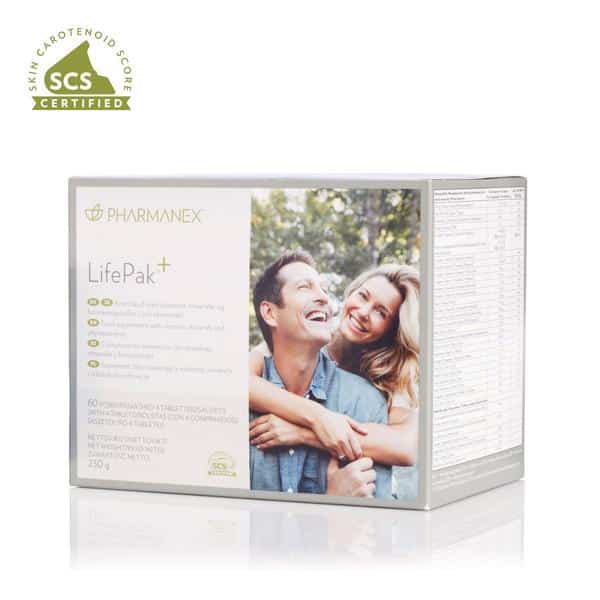
9 Body Functions Supported by LifePak+
Based on EFSA-approved health claims for the vitamins and minerals contained in LifePak+.
How LifePak+ compares to Irish pharmacy brands
| Criteria | LifePak+ | Vitabiotics Wellman/Wellwoman | Holland & Barrett Complete | Centrum Advance |
|---|---|---|---|---|
| Number of nutrients | 20+ | 24 | 18 | 24 |
| Format | Dual sachet (tablet + soft-gel) | Single tablet | Single tablet | Single tablet |
| Antioxidant blend | C, E, selenium, carotenoids | C, E, selenium | Limited | C, E |
| Third-party certified | SCS (NSF) | GMP | GMP | GMP |
| Bioavailability design | Fat/water-soluble separated | Combined | Combined | Combined |
Frequently asked questions
Does the HSE recommend vitamin D supplements for Irish adults?
Yes. The HSE recommends 10µg (400 IU) of vitamin D daily for all adults from October to March, and year-round for at-risk groups including those over 65, pregnant women, and individuals with dark skin.
Is iodine deficiency a concern in Ireland?
Yes, and it's underappreciated. Ireland doesn't mandate iodine fortification of salt or bread. UCD research has documented inadequate iodine status in sections of the Irish population. A multivitamin containing iodine addresses this specific gap.
How is LifePak+ different from pharmacy-brand multivitamins?
LifePak+ separates fat-soluble vitamins (soft-gel capsule) from water-soluble ones (tablet) in a dual-sachet format for optimised absorption. It holds SCS certification from NSF International — independent off-the-shelf testing, which is a stricter standard than basic GMP.
Can I take LifePak+ alongside prescribed medication?
Consult your GP before combining any supplement with prescription medication. Specific interactions exist — vitamin K with anticoagulants, calcium with thyroid medication, and iron with certain antibiotics.
How long before I notice results from a multivitamin?
Correcting a vitamin D deficiency takes 8–12 weeks of consistent supplementation. Some people notice improved energy within 2–4 weeks, particularly if B12 or iron was low. Consistency matters more than the brand name.
Food supplements should not be used as a substitute for a varied and balanced diet and a healthy lifestyle. Do not exceed the recommended daily dose. Keep out of reach of young children. This product is not intended to diagnose, treat, cure, or prevent any disease.
Data sourced from the IUNA National Adult Nutrition Survey, HSE guidelines, TILDA study, EFSA reports, and peer-reviewed research cited in text. Product information from official Nu Skin Pharmanex documentation.
Independent Nu Skin Brand Affiliate — not produced or endorsed by Nu Skin Enterprises Inc.