
2 April 2026
The Canadian Winter, Your Immune System, and the Case for a Quality Multivitamin
From October through April, most Canadians cannot produce sufficient vitamin D from sunlight. North of the 37th parallel — which includes every major Canadian city — winter UV levels are too low for cutaneous vitamin D synthesis. Statistics Canada's Canadian Health Measures Survey (CHMS) found that 32% of Canadians have vitamin D levels below the cut-off for adequacy, rising to 40% during winter months. This isn't a lifestyle problem. It's a geography problem.
We reviewed the Canadian data on micronutrient status, compared supplement options available here, and spent ten weeks testing a comprehensive formula. For Canadians specifically, the case for a well-designed multivitamin is stronger than in most countries — and it starts with winter.
Vitamins and your immune system: what the research shows
The connection between nutrition and immune function has been studied for decades, and the evidence on specific micronutrients is robust. Here's what the peer-reviewed research supports:
Vitamin D deserves special attention for Canadians. The Canadian Medical Association Journal (2010) published an analysis showing that Canadians with the lowest vitamin D levels had the highest rates of respiratory infections. Vitamin D receptors are present on virtually every immune cell type, and the vitamin plays a direct role in the production of antimicrobial peptides — your immune system's first-line chemical defence.
Vitamin C supports neutrophil chemotaxis (the ability of immune cells to navigate to infection sites) and is consumed rapidly during infections. A 2013 Cochrane Review of 29 trials found that regular vitamin C supplementation reduced cold duration by 8% in adults. Not transformative, but consistent.
Zinc is required for T-cell development and function. The WHO considers zinc deficiency a significant contributor to infectious disease burden globally. Canadian adults aren't typically severely zinc-deficient, but marginal deficiency — enough to subtly impair immune function — may be more common than clinical data captures.
Selenium supports antibody production and the activity of natural killer cells. Research from the Lancet (2012) demonstrated that selenium status influences the immune response to viral infections, with adequate selenium associated with more effective immune signalling.
Bone health beyond calcium: the vitamin D, K2, magnesium triangle
Osteoporosis Canada reports that at least 1 in 3 women and 1 in 5 men will suffer an osteoporotic fracture in their lifetime. For decades, the focus was on calcium supplementation alone. The evidence now paints a more complex picture.
Vitamin D is essential for calcium absorption — without adequate D levels, the intestine absorbs only 10–15% of dietary calcium compared to 30–40% with sufficient D. Given Canada's latitude and the CHMS deficiency data, this is a critical factor. But the story doesn't end there.
Vitamin K2 (menaquinone) activates osteocalcin, the protein responsible for binding calcium into bone matrix. Without K2, calcium may deposit in soft tissues — including arteries — rather than bone. A 2013 study in Osteoporosis International found that K2 supplementation (180µg MK-7 daily) significantly improved bone mineral content over three years.
Magnesium converts vitamin D into its active form (calcitriol) and is itself a structural component of bone crystal. Approximately 60% of the body's magnesium resides in bone. Canadian dietary surveys consistently show magnesium intake below recommended levels for a substantial portion of the population.
In our view, any serious bone health strategy needs all four: calcium, D3, K2, and magnesium working together. Calcium alone is a partial solution at best.
How your vitamin needs change with age — the Canadian context
Health Canada's Dietary Reference Intakes set different targets by age and sex. Some of the shifts are significant:
- After 50: Health Canada recommends that all adults over 50 take a daily vitamin D supplement (400 IU minimum). B12 requirements remain the same, but absorption declines — Health Canada recommends fortified foods or supplements for B12 after 50.
- Women of childbearing age: Folate requirements increase to 400µg daily to prevent neural tube defects. Iron needs are higher during reproductive years (18mg vs 8mg for men).
- After 70: Vitamin D recommendation increases to 800 IU. Calcium requirements rise to 1,200mg (from 1,000mg). Protein and B6 needs also increase.
What struck us reviewing the Health Canada data: the gap between recommendations and actual intake widens with age, precisely when the body's ability to absorb nutrients is declining. A well-designed multivitamin becomes more important, not less, as you age.

9 Body Functions Supported by LifePak
Based on established nutritional science for the vitamins and minerals in LifePak. Source: Nu Skin Pharmanex product documentation.
How LifePak compares to Canadian pharmacy brands
| Criteria | LifePak | Jamieson Complete | Centrum Complete | Garden of Life mykind |
|---|---|---|---|---|
| Number of nutrients | 20+ | 23 | 24 | 16 |
| Format | Dual sachet (tablet + soft-gel) | Single caplet | Single tablet | Whole-food tablet |
| Antioxidant blend | Yes — C, E, selenium, carotenoids | Yes — C, E | Yes — C, E | Whole-food sourced |
| Third-party certified | SCS (NSF) | NPN / Health Canada | NPN / Health Canada | NSF |
| Bioavailability design | Fat/water-soluble separated | Combined | Combined | Whole-food matrix |
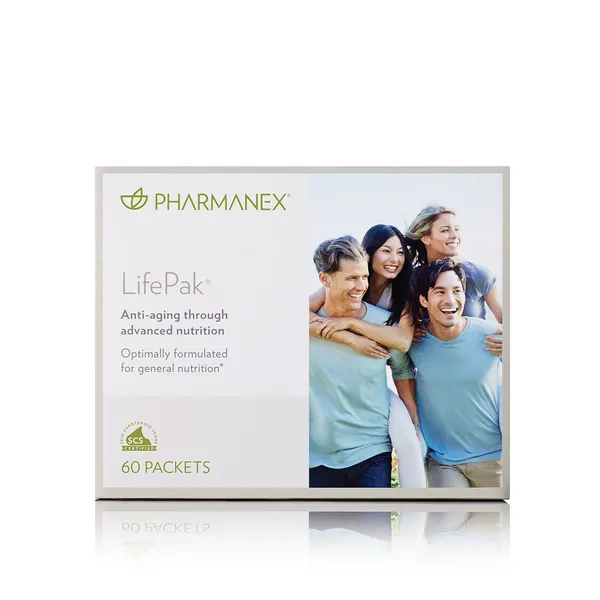
Jamieson is a respected Canadian brand — widely available and NPN-registered with Health Canada. Centrum has the name recognition but uses a traditional compressed-tablet format with standard nutrient forms. Garden of Life appeals to the organic/whole-food market. LifePak's dual-sachet approach is less common in Canada but addresses the fat-soluble/water-soluble absorption issue more directly than single-tablet alternatives.
Frequently asked questions
Do all Canadians need a vitamin D supplement in winter?
Health Canada recommends all adults over 50 supplement with vitamin D year-round. For younger adults, CHMS data shows 40% are deficient in winter. Given Canada's latitude, a winter vitamin D supplement — or a year-round multivitamin containing adequate D3 — is well-supported by evidence.
How is LifePak different from Jamieson or Centrum?
LifePak separates fat-soluble and water-soluble vitamins into different delivery formats (soft-gel capsule and tablet) within each sachet for optimised absorption. It also holds SCS certification from NSF International, involving independent off-the-shelf product testing. Standard single-tablet multivitamins compress all nutrients into one format.
Can I take LifePak with prescription medication?
Consult your healthcare practitioner before combining any supplement with prescription medications. Specific interactions exist — notably vitamin K with blood thinners and calcium with thyroid medications. Your pharmacist can advise on appropriate timing.
Is the MTHFR gene variant common in Canadians?
Yes — an estimated 10–15% of Canadians carry the MTHFR C677T variant, which reduces the ability to convert folic acid to its active form. For these individuals, a supplement containing methylfolate (5-MTHF) rather than synthetic folic acid is preferable. LifePak uses bioactive nutrient forms.
Why does LifePak come in sachets instead of a bottle?
Each daily sachet contains both a tablet (water-soluble vitamins and minerals) and a soft-gel capsule (fat-soluble vitamins in a lipid base). This separation optimises absorption of both types. Individual sachets also protect nutrients from air and moisture exposure better than an opened bottle used over months.
This product is not intended to diagnose, treat, cure, or prevent any disease. Consult your healthcare practitioner prior to use.
Data sourced from Statistics Canada Canadian Health Measures Survey, Health Canada Dietary Reference Intakes, Osteoporosis Canada, and peer-reviewed research cited in text. Product information from official Nu Skin Pharmanex documentation.
Independent Nu Skin Brand Affiliate — not produced or endorsed by Nu Skin Enterprises Inc.